
Search Results for: swiss cheese

Amish Butter Cheese: Everything You Need to Know
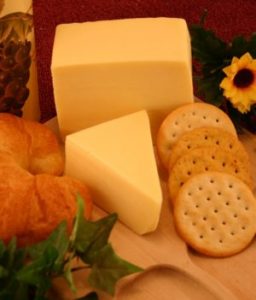
Today we continue our exploration of cheeses with a cheese that is very local to us and close to our hearts: Amish Butter Cheese.
What is Amish Butter Cheese?
Amish Butter Cheese is one of our premium local cheeses.
This unique cheese has a full buttery flavor and is traditionally made by the Amish, this cheese has a wide variety of uses. It is derived from butterkase, its closest ancestor. Butterkase is a buttery and creamy cheese that originates from Austria and Germany. Unlike its predecessor, it does not have a rind. It is a cow’s milk cheese with a pale yellow color. Good quality butter cheese is made from milk collected from cows that are not on artificial hormones. The Amish process of cheese-making does not include any artificial flavors, ingredients or preservatives, which gives the cheese real quality.
If you are fond of only the best quality cheese, it is important to choose authentic Amish butter. Remember that while most of the products labeled Amish butter cheese are genuine, some of them may just refer to Amish as a method of cheese making. These do not come with the Amish guarantee.
How should I eat it?
This cheese is ideal for melting and is featured in many fondue recipes. Try it with crudites and fresh bread for an incredibly fun dinner. Fondue is great if you are having guests over because everyone can select their own options.
It is also a good snack cheese as it is semi-soft and very easy to slice or cube. Many restaurants located near Amish counties feature butter cheese on their sandwiches and burgers. Try melting it in a grilled cheese or adding it to your favorite pasta dishes.
Are there any similar cheeses?
Yes, we also offer a cheese called Havarti, which is imported from Denmark. We stock the plain cheese as well as options infused with dill or caraway. Havarti Cheese has a buttery aroma and can be somewhat sharp in the stronger varieties, much like Swiss cheese. The taste is buttery, with both sweet and acidic undertones.
What should I drink with it?
This butter cheese pairs well with Chardonnay as the buttery flavors blend well together. For beer lovers, we would recommend trying this cheese with any lager or pilsner. It even pairs well with brandy!
Have you tried Amish Butter Cheese? How do you like to eat it? Let us know in the comments!
Lacy Swiss: Everything You Need to Know

You know that we love to help you get to know all of the cheeses that we have on offer. If you always pick up Swiss Cheese then you might not have tried Lacy Swiss, thinking that it’s just a variation. However, it’s a great alternative and a really delicious way to eat cheese with a lower fat and sodium content.
What is Lacy Swiss Cheese?
Lacy Swiss was invented by Alpine Lace Brands in 1985 in response to the growing need for healthier alternatives. This cheese is closely related to Swiss cheese, but the whole milk used to produce swiss cheese is replaced with low fat milk to provide a healthier alternative with a lower fat content. It gets its name from the lacy appearance of the slices, which usually have a creamy, ivory color to them. It has a delightfully light and nutty flavor. If you follow a lactose-free diet, then this cheese is naturally free of lactose.
How should I eat Lacy Swiss Cheese?
It’s a great table cheese but it is also delicious on deli sandwiches or to top off hamburgers and patty melts. It’s rather light and delicate, so if you’re looking to add a true Swiss flavor to a recipe, our sharper imported varieties like Jarlsberg or Gruyere may be better choices.
It melts very well, so it is a good option to use in quiches or pasta dishes when you want to add creaminess without too much fat. We also love it paired with dried fruits and nuts, so it’s a great addition to any cheeseboard, especially if you want to offer a healthier option. Try it with slices of apple or pear for a refreshing afternoon snack.
What is Lacy Baby Swiss?
We also stock Lacy Baby Swiss. This is another of our local selections. Lacy Baby Swiss is a young, semi-soft cheese distinguishable by its myriad of small holes. Baby Swiss is made by substituting water for the milk’s whey to slow bacterial action compared to a traditional Swiss Cheese. The Lacy version has smaller holes and a milder flavor, as well as the lower fat and sodium content found in Lacy Swiss.
What should I drink with it?
Due to their mild flavor, these cheeses very well with numerous wines. The most popular pairings are Cabernet Sauvignon and Merlot. but Beaujolais and Pinot Noir are also great matches. If you are a white wine lover, then Chardonnay, Riesling, and Sauvignon Blanc would all be good choices. Lacy Swiss even goes well with Lager, Pale Ale, and Weiss Beer.
We hope you’ve enjoyed our exploration of these healthy cheeses. Perhaps you could by a few different Swiss types of cheese and compare them to see which is your favorite. We even offer a Smoked Swiss Cheese if you like a smokey taste on your cheeseboard. Pop into the store if you’re nearby and we’ll help you to choose a great selection.
How do you like to enjoy Lacy Swiss cheese? Let us know in the comments!
Lucerne Cheese: Everything You Need to Know
We continue our exploration of cheese from around the world with a look at Lucerne cheese today.

What is Lucerne Cheese?
Lucerne Cheese is another of our local selections, made in Charm, Ohio by the original producer Guggisberg Cheese. The Guggisberg Cheese Company was started in 1967 just outside of Charm, Ohio by cheese connoisseur Alfred Guggisberg, an alumnus of the famous Swiss Federal “Molkereishulle” (Cheese Maker’s Institute).
Lucerne Cheese is a young, semi-soft cheese with small holes, somewhat similar to Baby Swiss. It has a very mild flavor that is both light and smooth. It’s also lower in fat and sodium than Swiss cheese, making it a delicious favorite for those counting calories or watching their sodium intake.
Do you offer other local cheeses?
Yes! We stock a huge range of local cheeses including Swiss, Baby Swiss, Sharp Swiss, Amish Butter Cheese, Yogurt Cheese, and several variations of each. We’re really proud to stock such a great range of cheeses from right here in Ohio. Please pop into the store if would ever like to try any of them; we’re happy to help!
How is Lucerne Cheese made?
Lucerne cheese is made in the same manner as many other kinds of cheese, by separating the curds and whey. Natural bacteria consume the lactic acid in the cheese, producing small holes. The aging process breaks down the milk sugar, reducing the carbohydrates in the cheese as well as the lactose content.
How should I eat Lucerne Cheese?
This cheese melts well, so you could enjoy a slice of it on a burger or in a healthier grilled cheese. Our favorite way to eat it is grated over soups and salads. It adds flavor and texture without adding too much fat to your meal. It’s also mild enough that it won’t overpower your dish.
If you are serving it as part of a cheeseboard, try to include fruits such as pears, apples, and grapes. The sweetness of these fruits is excellent against the mild cheese. Cut the Lucerne into thin slices that your guests can enjoy or even cubes to accompany fruit on skewers. It’s a great snacking cheese for those moments in the afternoon when you need a quick savory pick-me-up.
What should I drink with Lucerne Cheese?
This cheese pairs very well with a wide selection of different wines. The most popular red wine pairings are Cabernet Sauvignon and Merlot, but Beaujolais and Pinot Noir are also great matches. If you prefer white wine, Chardonnay, Riesling, and Sauvignon Blanc would all be good choices. If you are a beer lover, then Lucerne Cheese goes well with Lager, Pale Ale, and Weiss Beer.
How do you like to eat Lucerne Cheese? Let us know in the comments!
Havarti Cheese: Everything You Need to Know
Today we continue our profiles of cheeses with a look at a Danish treat: Havarti cheese.

What is Havarti Cheese?
Havarti Cheese or Cream Havarti (Fløde Havarti in Danish) is a semi-soft Danish cow’s milk cheese. It is rindless, with a smooth surface and a cream or yellow color depending on the type. It has very small and irregular eyes (holes).
It has a buttery aroma and a generally sweet taste with a slightly acidic tang. It can be sharp in the stronger varieties, resembling Swiss cheese.
We also stock Havarti with Dill and Havarti with Caraway for those looking for additional flavor. Dill combines the flavors of fennel, anise, and celery, with a slight bitterness, whilst caraway has a very pungent, earthy anise flavor.
How is Havarti Cheese made?
Havarti cheese was initially created by Hanne Nielsen who operated an experimental farm called Havarthigaard, in Øverød, north of Copenhagen, in the mid-19th century. It is made like most cheeses, by introducing rennet to milk to cause curdling. The curds are pressed into cheese molds which are drained, and then the cheese is aged. Havarti is a washed curd cheese, which contributes to the subtle flavor of the cheese.
It will usually be aged for around three months. As it ages it becomes saltier and nuttier.

How should I eat it?
Havarti is a table cheese that is suitable for slicing, grilling, or melting. When left at room temperature the cheese tends to soften quickly so it is great on a cheeseboard alongside hard cheeses.
It is delicious melted into pasta dishes including macaroni cheese or incorporated into a grilled cheese sandwich. Havarti even works well when grated onto a pizza with mozzarella. You can make an excellent cheese sauce with it that will pair well with grilled chicken and vegetables.
Because of its creaminess, it stands up well to spice. You can use it in recipes that call for chilies and it also pairs very well with the heat of horseradish. Try Havarti with Dill in cauliflower dishes for a fun combination of tastes.
If you are serving it as part of a cheeseboard, slice a few thin slices off the block to show your guests that this is a fantastic way to enjoy it. Serve it with fresh fruits and honey, as well as savory crackers and cured meats. Try our Streb Meats Fresh Smoked Sausage as a starting point.
What should I drink with this cheese?
The smooth, creamy flavor of Havarti goes well against most red wines. It can stand up to the high alcohol flavors of Zinfandel or Shiraz, but it is subtle enough to enjoy with a soft Merlot or Cabernet Sauvignon. If you prefer white wine, try a Sauvignon Blanc or Riesling, as the fruity flavors of both will complement the butteriness of the cheese. You could even try it with a light weiss beer or saison.
We hope that you’ve enjoyed our exploration of Havarti cheese today. How do you like to enjoy it? Let us know in the comments!

Gift Box #7: Shisler’s Cheese House Deluxe Gift Box
The best that Amish Country has to offer!
Our Shisler’s Cheese House Deluxe Gift Box includes:
- Troyer’s Trail Bologna Ring 1 Lb.
- Box of Heggy’s Chocolates
- Shisler’s Private Label Apple Butter (9 oz)
- Shisler’s Private Label Sweet Mustard
- Shisler’s Jam
- 3/4 Lb Colby.
- 3/4 Lb. Cojack (Marble)
- Block of Swiss Cheese
- Baby Swiss Cheese Wedge
- Summer Sausage Link
- Crackers.
- Fudge Cup

Brick Cheese: Everything You Need to Know
We love to help you explore cheeses that you might not have tried before here at Shisler’s Cheese House. Today we are introducing you to the delicious Brick Cheese.
What is Brick Cheese?
Brick Cheese is a medium-soft cheese that is made in the form of a large rectangular or brick shape. It may also be named “brick” because the cheese curds are pressed with clay-fired bricks. Its color ranges from pale yellow to white.
How does it taste?
It has a sweet and mild flavor when young, and matures into a strong ripe cheese with age. It crumbles easily and is a little sticky to the knife when sliced.
How is Brick Cheese made?
Brick Cheese is an American original, produced in Wisconsin. Whilst the cheese making process is similar to American Cheddar, it is cultured at a slightly higher temperature which gives it a marginally higher fat content and slightly alters the protein structure. The cheese has a slightly softer taste with a sharper finish than regular Cheddar.
It was created in 1877 by John Jossi, a Swiss-born American cheese maker. Jossi came to the states in 1857 from Switzerland with his parents at the age of 12. The family settled first in upstate New York, but later Jossi moved to Richwood, in southwest Wisconsin. He envisioned a cheese made with curd that was drier than that used for the Limburger he had produced in the factories he worked in. He came up with the idea of using bricks to press the cheese, creating the shape that we know today.
How should it be eaten?
Brick Cheese is often served with corn polenta in the Midwest, where it is thinly sliced and melted underneath the polenta and then topped with tomato sauce.
It is also great for slicing and melts well, making it a delicious choice for grilled cheese sandwiches. This cheese goes very well with pickles, so it is perfect for adding flavor to a burger. Try it in your macaroni cheese or melted in potatoes gratin. You can even use it on pizza!
What should I drink with it?
If you like red wine, we recommend something fruity like a Beaujolais or Syrah to pair with brick cheese. White wines with peachy, tropical notes such as a Chardonnay or Sauvignon Blanc are both good choices. This is also a great cheese to serve if you or your guests prefer beer, as it pairs well with Bock, lager and even stout.
How do you like to eat Brick Cheese? Let us know in the comments.
Cheese Making: Which Milks Are Used?
We love to tell you more about the cheese making process here at Shisler’s Cheese House. The more that you know about cheese, the more you can shop for your favorites and discover new delicious delights.

Today we’re going to explain the different kinds of milk used in cheese making and which cheeses you might find them in.
Sheep’s milk
Sheep’s milk has a high lactose content. This means that we rarely drink it, but it is used extensively in cheese and yogurt making. It can sometimes have a distinctive flavor, although this is often masked by the salt used to create the cheese.
Sheep’s milk cheeses include Manchego and Pecorino. Romano Pecorino is made from the milk of sheep that have grazed on specific grasses to impart flavor into the milk. If you love blue cheese, then Roquefort is made with sheep’s milk and has a great tang to it.
Goat’s milk
Goat’s milk is more regularly enjoyed on cereal or as a drink than sheep’s milk. Its qualities mean that it sometimes suitable for those who cannot have cow’s milk.
You’ll find it in simple goat’s cheese or chevre. These cheeses have a creamy texture and a distinct, complex flavor. They are great for cooking with as this flavor works well with many sweet and savory ingredients. It also melts very well, making it an excellent way to add cheesiness to dishes.
Cow’s milk
The most common of the kinds of milk used to make cheese. It has a good amount of fat and protein which makes it favorable for the cheese making process. Look out for cow’s milk cheeses that do not contain any artificial hormones.
You’ll find it in Cheddar, Swiss, and Parmesan amongst many others.
Buffalo milk
This is one of the hardest types of milk to get hold of and so it is very prized within the dairy industry. It is mostly used to make mozzarella and gives it a particularly creamy taste and texture as it has a high fat content.
More unusual milk
These are the different types of milk that you’ll usually find represented on a cheese shelf, but there are still more unusual ones being used all the time. Perhaps you might like to try reindeer or moose cheese? In some countries, cheese made from the milk of a camel is enjoyed. Donkeys, horses, and yaks have all had their milk used to make cheese to enjoy. We are also seeing a rise in non-dairy milk being used to create cheeses that are suitable for vegans or those who cannot eat dairy products. Who knows what will be next into the cheese market?
We hope you’ve enjoyed our quick tour of the different kinds of milk used in the cheese making process. Next time you pop in to fill up your cheese shelf, why not try something made form a more unusual milk and see if you can taste the difference?
Which kind of cheese is your favorite? Let us know in the comments!
Shisler’s celebrating 60 years in the cheese business (The Daily Record)
Very Nice Article about us by Dan Starcher of the Daily Record:

Second, Third, and Fourth Generation owners Rita, Dennis, and Natalia Shisler
ORRVILLE — The small roadside store at the corner of U.S. Route 30 and Kidron Road, known as Shisler’s Cheese House, has served as a landmark to cheese connoisseurs, including comedian Bob Hope, for 60 years.
To celebrate, owner Rita Shisler is having a party. Festivities at the store, located at 55 Kidron Road, Orrville, started Friday and continue Saturday. There will be free bratwursts, prizes, music, face painting, a bounce house and, of course, cheese samples from 8 a.m. to 6 p.m.
“I remember picking up the phone one day and the caller said, ‘This is Bob Hope and I would like to order some Baby Swiss,’” said Rita Shisler. “I didn’t believe it, but the check came with his name, address and signature. I talked to him four or five times per year, every year, until his death. After Bob died, his wife would call and order cheese until she passed away.”
Shisler didn’t exactly know how Hope heard of the store, but she kept copies of his checks and his signatures as mementos.
Another big-time order came courtesy of the owner of the NFL’s San Diego Chargers.
“The team owner of the Chargers came in and had some ham,” Rita recalled. “He fell in love with it. He then had me ship them to every team owner across the United States. I did that for years. We packed them in coolers and enclosed a card. Even as new owners came along, we would send to them. He wanted all of the other owners to have some Streb’s Ham.”
Another story, Rita recalled, was when Grandpa John Shisler was taken to jail for operating the business on Sunday. “He purchased the store from Fred Bieri in 1958 and back then there was a law, the blue law, that you could not be open on Sunday to conduct business.”
“The family went to post bail but he refused,” said Rita. “They finally released him after a couple of days.”
John Shisler’s son, Dan, took over the store in 1959 and, after he and Rita were married, he went to work elsewhere and Rita took over operations. She has been growing the operation ever since. Dan passed away 14 years ago.
At 72 years old, Rita Shisler isn’t slowing down. In fact, she is as busy as ever serving in various civic organizations, but she is slowly turning business operations over to her son, Dennis, while her other son, DJ, runs a store in Copley.
Dennis served in the United States Marine Corps, attended college and worked in the corporate world for a number of years before returning to the family business.
“I never thought I would be here today. I never wanted to come back. I never wanted to live here. I never wanted anything to do with a small town,” said Dennis. “But after my daughter was born, I reconsidered.”
Since coming to work for his mother, Dennis has focused on modernizing operations and building the internet ordering component of the business.
“She has brought the store to this level and she is wonderful for public relations,” Dennis said. “She really brought this place to the next level from a marketing standpoint. She built up the retail business, and I want to expand it online and focus on website sales.”
A steady stream of loyal customers were pouring in on Friday as Rita was celebrating six decades of business with friends and family while offering bratwursts and cheese samples to customers outside.
“I have been making the trip here from Massillon for more than 30 years for Swiss cheese,” said Robert May. “Everything they have is great and the people are so friendly.”
Linda Nussbaum of Orrville has been frequenting the store for 40 years.
“We used to stop here and get cheese on our way to our grandparents’ house nearby,” said Nussbaum. “We would have it eaten before we got there.”
Rita attributes much of the success of the business to her mentor, Harold Freedlander, of the former Freedlander’s department store.
“I was struggling with the business and I went to SCORE (service corps of retired executives), and he became my mentor,” Rita said. “He helped and guided me and that is when things started to connect and the business began to turn around. I thank Harold Freedlander from the bottom of my heart.”
Visit Shisler’s Cheese House online at www.shislerscheese.net and www.wordpress-436460-1531479.cloudwaysapps.com for additional information.
The original article in The Daily Record can be found here.
Shisler’s Cheese House, still darn Gouda after 60 years (Massillon Independent)
GREAT article about us in The Massillon Independent by Jolene Limbacher

Second, Third, and Fourth Generation Shislers: Rita, Dennis, and Natalia
ORRVILLE Say “cheese” and smile because Shisler’s Cheese House is celebrating its 60th anniversary Friday and Saturday with fun, food and festivities.
It’s a joyous occasion for matriarch Rita Shisler and her family, who have shepherded the small but mighty specialty food shop, which has been a longtime popular tourist stop on the east-west corridor of Rt. 30.
On Aug. 7, 1958, Grandpa John Shisler purchased the cheese house from Fred Bieri, an elderly cheesemaker from Switzerland. Now, six decades and tons and tons of cheese later, it’s time to party.
Throughout the next two days, the celebration will include music, prizes, face painting, characters from the movie “Frozen,” a bounce house and free cheese samples, hot dogs and grilled bratwurst.
The 900-square-foot store, which does a robust business:
-
- Sells 2,000 pounds of Swiss cheese alone every week.
-
- Offers imported cheeses from Denmark, Spain, Switzerland, Italy and Holland.
-
- Carries 82 different kinds of local cheeses made at six Holmes County cheese factories.
-
- Shipped cheese and gourmet products to 30 different countries last year.
-
- Ships to every state in the United States, with the most cheese and bologna going to Florida.
-
- Has shipped hams made at nearby Streb’s Meats to every National Football League owner.
-
- Used to send a wheel of baby Swiss every Christmas to legendary comedian Bob Hope. After he died at age 100 in 2003, the shipments continued to his widow, Dolores, until her death in 2011.
It’s a shame, Rita Shisler lamented, that many people only know about pre-packaged cheese that’s cut into slices, wrapped in cellophane and sold as “processed cheese.”
“They have no idea what fresh cheese tastes like,” she said. “Once they taste it, they absolutely fall in love with it.”
Jailed for keeping Sunday hours
For 49 years, Shisler has been opening the store at 8 a.m. Monday through Saturday and at 9 a.m on Sundays. She’s the good-will ambassador with the personal touch and instant rapport with customers, chatting about where they’re from, how many children and grandchildren they have and how they must try their latest kind of cheese.
She reminisced about Grandpa Shisler, who at 19 years old, became the youngest postmaster of Dalton in 1909, a position that was once a political appointment. He held that job for 16 years.
He was quite the rebel, she recalls, because soon after he bought the store in 1958, he didn’t cotton to being told what hours he could keep.
Until, that is, the Wayne County sheriff conducted a sting operation by sending an employee to the store on a Sunday to buy a loaf of bread. With sirens blaring, they hauled a defiant Grandpa off to jail for violating Ohio’s now-defunct blue law, which prohibited retail activity on Sundays.
Then, to punctuate his personal dislike of government dictating his business hours, he refused to allow son Dan to bail him out right away. Grandpa was 76 when he died in 1966.
“I would not have gone to jail,” said Rita Shisler. “I would have followed the law and closed the store.”
Under Dan Shisler’s ownership, which began in 1959, the store grew by leaps and bounds. Rita Shisler said her husband was one of the best baseball players to come out of Dalton High School. From there, he went to Ohio University where he played ball, signed with the St. Louis Cardinals, but tore up his shoulder and never fulfilled his dream of playing in the majors.
After Dan and Rita married, he turned the store over to her and became delicatessen and wine manager at the former A & D Foodarama. They opened a second location — Shisler’s Cheese & Wine Barrel — in the Belden Village area in 1974. That store was closed seven years later so they could spend time with sons, Daniel (DJ) and Dennis before they graduated high school and went to college.
Rita’s husband died 14 years ago.
Expansion plans
With an estimated 40,000 cars a day passing Shisler’s Cheese House, Rita Shisler said about 80 percent of their customers are tourists or folks who frequently travel to the Columbus and Canton areas.
Plans call for expanding the current structure late this fall, making it at least three times larger and having a dining area for soups and sandwiches. Dennis, a third-generation Shisler who manages the store, which is just outside of Dalton, would like to construct a building nearby to expedite shipping orders. Sixty percent of shipments, he said, go to the Tampa-Clearwater area, crediting much of those sales to local people who have moved South.
The family also has discussed opening stores in the Greater Tampa area, Dallas and perhaps Reno.
A second location is open in Copley at 1275 Cleveland-Massillon Road and is owned by son Daniel Shisler. It offers catering, deli sandwiches and soup, wines and a large variety of specialty foods.
At 72, Rita Shisler remains active in Orrville Lions Club, Dalton Ruritans, Women’s Network of Wooster and Akron, and Quota International, a women’s group that assists community members with hearing problems. The store employs many area students, who Shisler mentors about business and doing what’s right.
Dennis Shisler and his wife, Claudia, have a nine-year-old daughter, Natalia, who, as a fourth-generation Shisler, enjoys being in the store with her grandmother and running the cash register and making change.
See the full text of the original article in the Massillon Independent here.
Smoked Cheese: Everything you need to know
Are you a cheese lover? Have you ever tried smoked cheese?

We stock a huge range here at Shisler’s Cheese House but we know that some customers don’t pick it up because they’re not sure about how it’s made or how to use it. That’s where this blog post comes in. We’re going to tell you everything you need to know about smoked cheese and show you some great uses for it so that you can add this delicious treat to your table.
A huge range of smoked cheese
We currently offer Smoked Baby Swiss, Smoked Bacon Cheese, Smoked Cheddar, Smoked Gouda, Smoked Habanero Cheddar, Smoked Horseradish Cheese, Smoked Hot Pepper Cheese, Smoked Mozzarella, Smoked Provolone, and Smoked Swiss Cheese.
That’s 10 smoked cheeses to choose from! We recommend that if you haven’t tried it before, start with a simple hard cheese such as the Smoked Cheddar or Smoked Gouda.

How is cheese smoked?
There are several ways to smoke cheese, but the main ones are the cold or hot smoke processes. The cold smoke method involves smoking chunks of cheese in a smoker for a few hours at a time with a tray of ice under the cheese. This allows the smoke to infuse into the cheese without it getting too hot and melting. Some smokers will keep the heat source separate to the cheese so that there is no need for the ice.
Smoked cheeses are usually aged for a brief period to allow the smokiness to mellow. The type of wood used will affect the flavor of the cheese. Common types of wood used include apple, oak, hickory, and chestnut. Our Smoked Cheddar is slowly smoked over a hickory fire to give it a deeply smoky flavor. So is our Smoked Horseradish Cheese which has a kick from the horseradish root and our Smoked Hot Pepper Cheese which is also really spicy. Our Smoked Mozzarella is smoked using both hickory and cherry wood smoke.

How should I eat smoked cheese?
There are so many ways to enjoy this but we are going to share just a few with you to give you inspiration today.
- On a cheeseboard
Add another dimension and extra flavor to your cheeseboard with smoked cheeses. They’re also great if you’re building a board around different textures of cheese. These are hard to semi-soft cheeses so you have a good range to choose from. Smoked cheese will surprise your guests if they haven’t tried it before!
- In a sandwich
Thin slices of smoked cheese alongside a good quality ham makes for a very special sandwich indeed. A sweet relish will offset the smokiness if you need some balance.
- On tacos
Grate some smoked cheese over your tacos for an authentic, smoky flavor.
- With fruit
Tart apples or white grapes are the perfect accompaniment to smoked cheese as the flavors marry really well.

We hope you learned something about smoked cheese today! Have you tried it? Let us know in the comments!

