
Search Results for: swiss cheese
Common Questions About Cheese
As cheese lovers, it’s easy to know all about the different cheeses available however, there are some simple wonders and questions we are left with regarding things like presentation and storage so here are some quick answers to help all your cheese queries.

Can You Eat Cheese When You’re On A Diet?
If you enjoy cheese in moderation, it can easily fit into a healthy diet. In fact, cheese is a good source of essential nutrients such as calcium, protein and Vitamin A. These nutrients are important for keeping your skin and eyes healthy, your bones and teeth strong, and your muscles growing. Studies have shown that if you eat a piece of cheese after eating a meal or a sugary snack, it can restore minerals of tooth enamel and protect your teeth against cavities.
Which Cheeses Have The Lowest And Highest Levels of Fat?
Every cheese will come with its own nutritional profile which will be displayed on the label. Labels make it easier for if you are watching your fat intake as you can refer to it for the cheese’s fat facts. However, here are some general guidelines for if you find yourself at a cheese dinner party where there are no labels:
Low-Fat Cheeses: Cheeses like cottage cheese, Quark, Ricotta, and Edam. Also, any cheeses which are labeled with low-fat, reduced-fat, and even fat-free versions of your favorite cheeses are readily available.
Medium Fat Cheeses: These cheeses include Camembert, Brie, Emmental, Edam, Feta, and Mozzarella, as well as a lot of process cheeses and soft goat’s milk cheeses.
High Fat Cheeses: Cheeses such as Cheddar, Cheshire, Caerphilly, Gouda, Gruyere, Parmesan, and Stilton are all high in fat but deliciously addictive!
Why Doesn’t Reduced-Fat Cheese Melt Well?
A lot of reduced-fat cheeses are made with added gums and stabilizers to help stimulate the flavor and texture to make them similar to the full-fat varieties. While these cheeses are great for shredding into salads, snacking on, or topping sandwiches, they do not perform well when heated. The reason for this is because of the lower amount of fat in the cheese. Without a decent amount of fat, the heated cheese won’t melt into a creamy texture, it will instead be turned into a hardened, clumpy, stringy mess. The best way to avoid that is to just use a full-fat variety for melting, because a little does go a long way, so it shouldn’t be too bad for you.
How Long Should You Keep Cheese?
No matter how well you store your cheese, it will still continue to ripen in your refrigerator. This is why it is especially important to consume soft cheeses soon after you have purchased them. Once you open soft cheeses, they will only keep for around one to two weeks.
On the other hand, harder cheeses tend to remain fresher for longer. Blue cheeses will keep for one to four weeks, cheddars and swiss cheeses will keep for several weeks, and hard cheeses are usually good to eat for several months.
Also, large pieces of cheese keep a lot longer than shredded cheese, which is why labels usually state to consume shortly after opening the packet.
What Is Processed Cheese?
It was first invented in 1911 by Switzerland’s Walter Gerber. Then, in 1916, James L. Kraft applied for his method for his processed cheese to be patented. A lot of processed cheeses today are sold in individually wrapped sandwich slices, which are great for melting into burgers, but definitely not for serving with fine wine!
Processed cheeses usually consist of a blend of fresh and aged cheeses combined with some preservatives, coloring, and emulsifiers to make them smooth and ease melting. They are then pasteurized to stop the ripening process which ultimately gives the cheese a longer shelf life. This does come at some sacrifice though because processed cheese definitely lacks the distinctive flavor and texture that natural cheese has.
Is It Best To Serve Cheese Chilled Or At Room Temperature?
It is usual that you will serve cream cheeses like Ricotta, Boursin and Quark chilled, however all the other variety of cheese are best enjoyed at room temperature. Room temperature is when cheese is at its best level of flavor, texture, and aroma. If you eat cheese too cold, you are basically missing out, so just remove cheese from the refrigerator 30 minutes before serving and enjoy!
Can You Freeze Cheese?
It is fine to freeze cheese, it can be frozen to make it last a lot longer. You do however have to understand that cheese which is frozen will go through some textural changes. Softer cheeses may separate, and harder cheeses may become crumbly. However, if you are going to use the frozen cheese in cooked dishes, you probably won’t notice any difference.
A quick tip to freezing cheese is to double wrap it and only keep it in the freezer for up to six months. When you are ready to take it out the freezer, thaw it in the refrigerator and use the cheese within a few days.
The Wonderfully, Unique Cheeses Available At Shisler’s Cheese House!
Our fantastic Cheese House originally opened in 1958. Since then, we have come a long way and perfected our cheese to a high standard. The 2 main goals of our Cheese House have always been to provide wonderful local cheeses and gourmet foods to everyone, along with exceptional and friendly customer service.

We are currently owned and operated by the third generation of Shislers. We have 2 locations, the original being in Orrville, OH and the second being in Copley, OH. Because of our dedication of cheese and gourmet foods, we ship all throughout the United States and to over 30 different countries!
We have a wide selection of cheese, to your staple cheeses such as American Cheese and Swiss, to our more specialized, unique blends which we would love for you to try!
Here are some of our specialty cheeses:
Hot Pepper Cheese

Want to spice up your cheese plates? We have just the right cheese for the job! Our Hot Pepper Cheese has just the right amount of heat to make a perfect balance of flavor with a little extra kick! You have to try it to believe it!
Green Onion Cheese

We love to support local businesses and that doesn’t change when it comes to our cheese! Our Green Onion Cheese is made with all-natural 100% Ohio farm milk and real green onion. It contains no artificial growth hormones and is pasteurized processed cheese.
Bacon Cheese

Everyone loves bacon! Bacon and cheese make many appearances together in well-known dishes such as Chicken, Bacon Pasta Bakes, Salads, Casseroles and much more. It only made sense to make a Bacon Cheese! This cheese is mild orange cheddar which is infused with smoked bacon.
Beer Cheese

Beer Cheese is one of our Wisconsin Cheeses along with Brick, Muenster, Limburger and our American Cheeses. Our Beer Cheese is not to be mistaken for the popular Beer Cheese dips of Kentucky, it is a semi-soft combination of Limburger and Brick Cheese. The taste and smell are very strong and can be enjoyed with a nice cold glass of beer.
Chocolate Cheese

This cheese is one way to get the best of both worlds! Our Chocolate Cheese is made from a local recipe and all the ingredients are locally produced, combining fine chocolate fudge with premium cream cheese. This makes for a smooth, creamy balance of sweet chocolate and mild cheese!
These 5 kinds of cheeses are must try cheeses! Don’t hesitate, trust our family of cheese experts at Shisler’s Cheese House, and you won’t regret it!
Order your quality, affordable, delicious cheeses today at-https://cheesehouse.com/cheese.aspx
Should You Eat Moldy Cheese?
It’s always a shame when we discover our food has gone to waste because of mold. While mold is usually a sign that it’s time to discard something, it’s not as clear exactly what to do when it comes to cheese. Here is a guide which will help you differentiate which cheese is ‘good’ and which is ‘bad’ when mold takes place.


Image Source: static1.businessinsider.com/image/54cffb496bb3f7225d1b7747/we-definitively-solved-the-debate-over-whether-you-can-still-eat-cheese-with-mold-on-it.jpg
Now there are very clear types of cheeses that must be discarded when mold occurs- soft cheese like cream cheese, cottage cheese, and ricotta cheese. Also, cheese that is shredded, sliced or crumbled should be discarded when mold appears. With these kinds of cheeses, the mold can send threads all throughout the cheese. Harmful bacteria such as salmonella, e.coli, listeria, and brucella can also grow throughout the cheese. So stay clear of any consumption if these cheeses have mold.
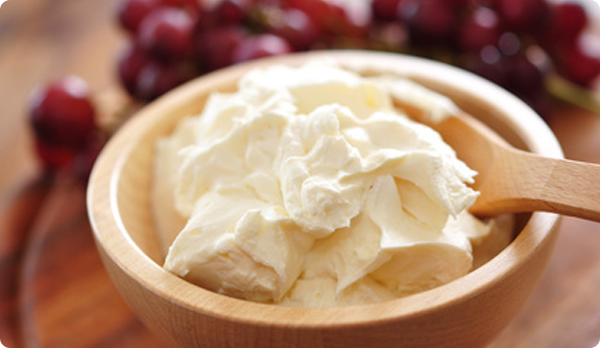

Image Source: newhealthadvisor.com/images/1HT00226/PART1.png
There is still hope for cheese with mold, though. Mold usually can’t penetrate far into hard and semisoft cheeses, like cheddar, parmesan, swiss and Colby. So it is easy to just cut the mold away from the cheese and eat the rest. It is safe practice to cut at least an inch around and below the mold to be safe, and do not contaminate the rest of the cheese by touching it with the knife.

Image Source: triggerwarning.co.uk/wp-content/uploads/2016/02/Cheese-board.jpg
It is true that not all molds pose a risk. Some types of mold are actually used to make cheeses, such as Camembert and Brie. These are safe molds to eat.
Whether or not you should eat the mold generally relies upon what type of cheese it is. It’s usually quite easy to differentiate between, but if you find yourself unsure, it is best to discard the cheese, just to be safe.
A World of Beer and Cheese!
Beer and Cheese: A New Marriage?
Beer and cheese may not be the first things you’d pair together, but believe it or not, the union of the two go all the way back to the Middle Ages. In fact, in Belgium, exceptional beer and cheeses were such an important part of their everyday lives, that even today it is a delicacy and small bowls of cheese are often served in beer bars to accompany your beer.
You may think the best suited alcoholic beverage to accompany cheese is wine. Although cheese can make the cheapest of wines enjoyable, wine can be overpowering to our taste buds at times and make it hard to relish delicious cheese to the fullest potential.
On the other hand, beer and cheese are both farmhouse products which automatically means they compliment each other. Typically, a farmer’s diet back in the day consisted of cold meat, cheese, and beer. Beer and cheese have very close origins, in the fact that barley, which is a cereal grass, is a product used to make beer and milk is a by- product of a cow eating grass. Consequently, the fact that they share such similar characteristics means that they are both alike in flavor and aroma and ultimately compliment each other greatly.
 Source: https://www.craftbeer.com/educational-resources/craft-beer-cheese-style-guide
How to pair beer and cheese
Try having your favorite beer with a plate of different cheeses and find one which you most enjoy with it, as the preference is the best way to find a pairing. Also, putting together complex beers with complex cheeses is a good tip when it comes to pairing the two.
Here’s a list of ideas when it comes to pairing beer with popular cheeses:
* Pale Ale with Sharp Cheddar
* Wheat Beer with Feta
* Fruit Beer with Mascarpone
* Pilsner with American Cheese
* Brown Ale with Colby
* Amber Lager with Parmesan
* Octoberfest Beer with Swiss Cheese
Basically, the main thing when it comes to pairing beer with cheese is having a play around with the process, experiment with your own preferences and remember that beer is the beverage which goes with all types of food or on its own, so theirs a huge variety of possibilities!
A Helpful Serving Tip:
Buy raw milk, cow, goat or sheep cheeses. Milk that is not pasteurized and has not been processed will culture while milk that has undergone pasteurization processes produces cheese whose scents and flavors are removed. Contrarily, cheese that are produced from raw milk are richer, fuller and support traditional cheese-making processes.
Best Practices For Keeping Cheese Fresh
Cheese is one of the most widely consumed foods across the world, on both a daily and annual basis. No matter what type of cheese you have, whether it be an imported chunk of Gouda or sliced Swiss from your local deli, it’s important to know how to keep cheese fresh and mold-free for as long as possible.

Here are a few ways that you can use to keep the cheese you purchase as fresh as possible for as long as possible.
NEVER USE PLASTIC WRAP to wrap cheese up. While it might be easy and convenient to throw cheese in some plastic wrap, doing such will just suffocate the cheese and prohibit the flavor from immersing from the cheese while adding a plastic-like taste to the cheese which would all but mask the actual flavor of the cheese.
DO NOT WRAP TOO TIGHT, DO NOT WRAP TOO LOOSE as cheese is very sensitive when it comes to its flavor and freshness. Ammonia is a natural odor that is emitted from cheese. When wrapping cheese too tightly, it will eventually take on the smell of this ammonia. When wrapping cheese to loosely, air is able to quickly work its way in and the cheese dries up and becomes hard very quickly.
CHEESE PAPER is the route you want to take to optimize the freshness of cheese. Cheese paper keeps cheese fresh as it is porous and acts as a safety net for the cheese from air while allowing room for the cheese to breathe.
WAX OR PARCHMENT PAPER is a good alternative to cheese paper. Wax or parchment paper serves the same benefit in keeping cheese fresh but only if you wrap cheese in wax paper, then place it in a partially sealed plastic bag. As an alternative measure, you can wrap the wax paper-wrapped cheese in aluminum foil if plastic bags are not your thing.
REPLACE your cheese wrapping agent. Whatever you are using to wrap up your cheese to keep it fresh, replace the paper after every instance in which you unwrap the cheese to ensure the freshest quality of cheese.
SOFT AND FRESH CHEESE go against the grain. When dealing with cheeses that are best aged, it is a best practice to keep these cheese sealed in their original containers. Such cheese include mozzarella, ricotta and chevre.
DATING IT will allow you to monitor the freshness value of your cheese with greater ease. Before putting your cheese in the fridge, add a date on the bag indicating when the cheese was wrapped.
A LITTLE AT A TIME will allow you to get the most freshness out of your cheese-eating experience. If you buy too much at once, it will take longer to consume all of the cheese. In order to maximize the freshness experience of cheese, but in smaller quantities and it will be easier to refrigerate as needed.
So, You Think You Know Cheese?
Cheese is one of the most hallowed and beloved foods on the planet, and is seemingly consumed on a daily or near-daily basis by a majority of the world’s populations. Cheese has been around since the beginning of time, it seems, and has transpired from a staple food to a culinary masterpiece.
 Source: http://www.ba-bamail.com/content.aspx?emailid=15982
Here are a list of cheese facts that may just add to the mystery, that is cheese and its curious cases…
Albeit, there is not much specific information concerning the history and origins of cheese, it is believed that cheese dates back to approximately 6,000 BCE, according to archaeologists. Experts have determined that, based on their findings, during that era, cheese was produced from the milk of cows and goats across Mesopotamia.
Studies have shown the mozzarella cheese has the highest rate of consumption of any other cheese on the planet. Moreover, there are over 2,000 different cheeses that are produced, circulated and consumed around the world.
Who are the largest consumers of cheese? Nope, not Italy or France, but Greece. On average, a person from Greece consumes about 60 lbs of cheese, annually, much of it coming in the form of Feta.
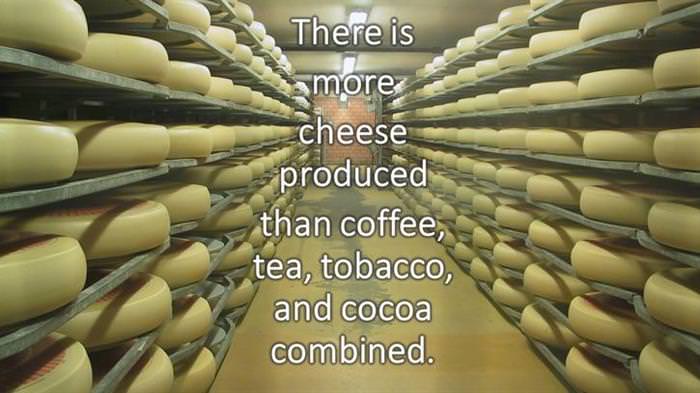
Cheese is the largest produced staple around the world. Its production is more than the production of coffee, tea, tobacco and cocoa beans, combined!
The very first cheese-making plan was born in Switzerland in 1815. The first mass production didn’t begin until 36 years later in the United States.
Cheese is an excellent source of protein, calcium and phosphorus, when eaten in moderation of course. Cheese gets a bad name mainly from its higher content of saturated fats.
Yes, the United States acknowledges the greatness of cheese. How so? They have dedicated the month of June to National Dairy Month while the last week of June is National Cheese Week.
Twenty million metric tons of cheese is produce on a global level annually and production will continue to increase every year.
On average, about 10 lbs of milk is needed to make just one pound of cheese. That’s a 10:1 ratio and seems like a ton of work for only one pound of cheese, but if it were not for cheese-making, a tremendous amount of milk would be wasted every year.
Cheese has a very long shelf life, and in some cases, cheese is exposed to mold which allows them to age properly. These cheeses include: Bleu Cheese, Gorgonzola and Brie, among others.
During the time of the Roman Empire, many larger homes belonging to Roman residents had separate kitchens that were designated for cheese-making. These kitchens were called “careale”.
Lastly, there are a number of cheeses that promote dental health as they prevent tooth decay. Cheese like mozzarella, cheddar, Swiss and American increases the amount of saliva flow which leads to elimination of sugar and acids from the mouth that would aid in decay.
Now is the Time to Order Your Shisler’s Cheese House Holiday Gift Boxes
While Christmas is meant to be a joyous, happy and exciting time of the year, it can just as easily be a very hectic time of the year, especially if you really haven’t a clue what to get someone as a Christmas gift. Do you ever find yourself in a holiday version of a “writer’s block”? Never know what to get a friend, a family member or a colleague? Yes, these can be tough and stressful times, not sure what to get someone while racing against the clock, with time not on your side, as you try to make a dash for a last-minute gift at the department store or specialty store.
What if we told you, we have a solution for you? What if we, at Shisler’s Cheese House, can help alleviate your Christmas shopping worries and stresses by letting us create a magical Christmas experience for your loved ones, your friends and even your coworkers? Have we got your attention now? Shisler’s Cheese House offers a wide selection of Christmas gift boxes with assorted cheeses, meats and other goodies. With a number of different options and gift box assortments that you can choose from, you cannot go wrong.
GIFT BOX OPTIONS
Gift Box 1: Baby Swiss Cheese
Contents
– 4 lb. wheel of Baby Swiss

Gift Box 2: Troyer’s Trail Bologna & Cheese
Contents
– 1 Lb. Troyer’s Trail Bologna Ring
– 3/4 Lb. Wheel of Colby
– 3/4 Lb. Wheel of Farmers
– Assorted Chocolates

Gift Box 3: Cheese Lover’s
Contents
– 3/4 Lb. Wheel of Cheddar
– 3/4 Lb. Wheel of Cojack (Marble)
– 3/4 Lb. Wheel of Farmer’s Cheese
– 3/4 Lb. Wheel of Pepper Jack
– Assorted Chocolates

Gift Box 4: Amish Cheese & Goodies
Contents
– 1 Lb. Baby Swiss Wheel
– 1 Summer Sausage Link
– 3/4 Lb. Wheel of Colby
– 3/4 Lb. Wheel of Pepper Jack
– Shisler’s Private Label Mustard
– Home Style Amish Jam
– Carr’s Crackers
– Assorted Chocolates
– 6 oz. REACH Coffee

Gift Box 5: Baby Swiss Cheese & Troyer’s Trail Bologna: A Classic Amish Country Combination
Contents
– 4 Lb. Baby Swiss Wheel
– Large Troyer’s Trail Bologna Ring
– Shisler’s Private Label Mustard
– Carr’s Crackers
– Assorted Chocolates
– 6 oz. REACH Coffee

Gift Box 6: Amish Country Sampler Gift Box
Contents
*The best that Amish Country has to offer! Our Amish Country Sampler Gift Box includes*
– Large Troyer’s Trail Bologna Ring
– 1 Lb. Box of Heggy’s Chocolates
– Home Style Amish Jam
– Shisler’s Private Label Hot Jalapeno Mustard
– 3/4 Lb. Wheel of Cheddar
– 3/4 Lb. Wheel of Cojack (Marble)
– 3/4 Lb. Wheel of Farmer’s Cheese
– 3/4 Lb. Wheel of Pepper Jack Cheese
– Baby Swiss Cheese Wedge
– Summer Sausage Link
– Townhouse Crackers
– 6 oz. REACH Coffee

A Cheese So Expensive, It Makes Gruyere Seem Affordable

When it comes to cheese, most really never think twice about the differences in cheese, texture, taste, sharpness and other characteristics that make cheese, well… cheese. As long as there is cheese available and on your burger, shredded on your pasta, topped on your salad or wrapped in your taco, that is the main focus on the minds of most when thinking “cheese”. What most do not realize is that, aside from your general cheese, such as Swiss, American, Cheddar among others, as the list goes on seemingly indefinitely, there is an unrealized and undiscovered “world” of cheese. From the United States to Canada to all of Europe, there are cheeses that are made every day that most are completely unfamiliar with.
Entering this undiscovered world of cheese, we travel all the way to Serbia, the location of one of the most expensive cheeses on Earth. What makes it so expensive is that it can only be made in Serbia as the milk used to make this cheese does not come from cows, nor does it come from goats, but instead, to make this cheese, the milk comes from the rare Balkan Donkey. The name of this cheese is “Pule” (poo-lay) and commands the hefty price in the world. In 2012, Pule was sold in bulk at a price that was considered discounted at over $750 per pound. The price for Pule increases exponentially on the open market going for upwards of $1300 per pound.

Why a cheese costing a seemingly ridiculous amount of money? Well, the process of making Pule itself is where much of its price is argued. Contrary to the modern marvels that would allow machines to extract milk from cows and goats, the milk coming from Balkan Donkeys is extracted by hand, each day, three times per day. To make matters even more intricate and arguable for the price paid for this cheese is that when milking these donkeys, very little milk is given off per sitting of milking these donkeys. All told it takes over 15 donkeys to produce a gallon of milk each day, and it takes over 3 gallons of milk to produce 1 pound of Pule.
Pule has been very popular for a very long time, especially to those familiar with its existence. Rumor had it that tennis star, Novak Djokovic used all of his winnings from his tournament to purchase the entire county’s supply of Pule, only later to discover the rumor was just that, a rumor. The global supply of Pule, albeit, a small supply relatively speaking, comes from a herd of Balkan Donkeys housed in a special nature preserve in the city of Zasavica in Serbia. Workers at the preserve view the production of Pule as a means of promoting the Balkan Donkeys which are considered by all right, an endangered species.
Cheese-Making Has Been Around For Longer Than You Might Think, Predating the Time of Jesus Christ

As we all know, Cheese has played an integral part of history, serving as sustenance through the ages for the human race since before the common era (before the time of Christ). From its infancy to the present day, although the processes have been slightly changed, adjusted and tweaked over thousands of years, the basic ideas and methodologies for cheese-making has not really changed all that much.
Cheese can come in many forms, from bricks to wheels to larger blocks. If you’d like to see a large block of cheese, stop by Shisler’s Cheese House and take a gander at our 50-pound block of Pearl Valley Swiss Cheese. One of the more unique traits to cheese is that it is one of the few foods that are more sought after for when aged, than when made fresh. Some cheese can age several months, while some can age for several years.
As we are most accustomed to cheese for its use as a means of sustenance, cheese also has served a number of purposes through the ages, many of which are entirely “unrealized” by present-day society.
If you sit down and talk to anyone involved in the meticulous process of cheese-making, while it has its variations, the most simple answer for cheese making is: warming up some fresh milk, adding a solution that would increase the acidity content that would enable the milk to become curdled. As it cools down, the extra liquid called “whey” is extracted and the resulting product is cheese. While this becoming a known fact across society and while we are aware of this process, overall, how and where did this process become the standardized way of cheese-making?
It is noted in the publication in a journal called, Nature, cheese-making process established its primitive roots some 7,000 years ago, while other sources place the first cheese-making processes around 8,000 years. Nonetheless, we are still looking thousands of years of cheese-making, and the incredible part of it all is that, for the most part, the cheese-making process has experienced very little change,aside from a number of tweaks and modifications, due in large part to ever-changing technology and machines that cut down on the process time.
Noted in the journal’s article was that the first insights leading to the belief of Neolithic cheese-making were a number of foreign vessels in which archaeologists extracted across Northern Europe over 40 years ago. What was odd with these extracted vessels was that there were holes in them, which could suggest evidence of a primitive cheese-making container.
Unfortunately, at the time, this was only one workable theory as there was no certainty behind the claim, nor a way to a prove such. As the times changes, so did the technology and with the age of mass movements in technology, this theory would finally be proven as forensics would allow scientists to discover traces of cow’s milk within these hole-riddled containers.
Cheese has been a staple for millennia as the availability and life of dairy products ultimately causing hunters to stray more away from the killing of cattle and livestock to a life more focused on dairy and dairy processes, including cheese making. While hunterss did not stray completely away from the use of cattle and livestock as sustenance, dairy and dairy process were now more favorable as hunters now had the option of now putting down their “prized” cattle for food.
Noted again in the journal, a geneticist out of University College London did tremendous research on these primitive cheese-makers only to discover that most Europeans of the Neolithic period would have been lactose intolerant, meaning, digesting the lactose sugar from milk would have been very problematic. However, during the cheese-making process, any lactose from the milk would be extracted and removed through the holes in the primitive, cheese-making containers. A chemist out of the University of Bristol in the United Kingdom discovered traces of milk buildup in pottery fragments across parts of Southwest Libya which dates back to prehistoric times.
As you can see, the evidence is quite revealing and has been scientifically proven. Cheese-making has been around for ages, dating back the some 7-8,000 years ago, essentially a world and time that has been all but forgotten of, but thanks in large part to technology, researchers, archaeologists and other scientist who dedicate their life’s work to such research, we can now begin to paint a picture of cheese-making, through the ages, even to a time before Jesus Christ, which is truly remarkable!
5 of the Healthiest Cheeses You Never Knew About… or Did You?

Cheese gets a might bad rap for clogging arteries and packing on the pounds. But just because you shouldn’t eat an entire platter of Paula Deen’s cheese balls doesn’t mean you have to avoid cheese altogether.
Cheese can be both delicious and a great source of lean protein, calcium, phosphorus, and other health benefits — if you choose the right varieties. Here are five cheeses that belong on any shopping list.
1. Feta
A key component of Greek cuisine, feta is lower in fat and calories than most cheeses, says Natalie Caine-Bish, an associate professor of nutrition and dietetics at Kent State University. A one-ounce serving — enough to make a Greek salad lover happy — has 4 grams of protein and only 74 calories.
Caine-Bish says feta’s characteristic strong flavor means you can get away with using less cheese without feeling cheated. Feta’s salty flavor makes it a good choice to crumble on salads and soups. It also pairs well with sweeter produce, like watermelon or sweet potatoes.
Tip: Although domestic feta is often made with cow’s milk, Greek feta is made from sheep or goat’s milk, which makes it a good choice for someone with problems digesting bovine dairy products. Keep in mind, though, that unpasteurized feta and other soft cheeses have a higher risk of containing the Listeria bacteria than other cheeses — so be sure to buy pasteurized feta if you’ll be serving it to a pregnant woman or someone with a compromised immune system.
2. String cheese
Seriously. String cheese, that favorite kid snack, is a great choice for adults too.
For starters, if you choose string cheese made of part-skim mozzarella, it’s low in calories and high in protein (a one-ounce serving has 71 calories and 7 grams of protein).
What’s more, string cheese isn’t actually a processed cheese — mozzarella naturally behaves in that stringy way, so it counts as a whole food. (Just make sure to buy string cheese that’s 100 percent mozzarella.)
Tip: String cheese is “quick and easy — grab and go, and already portioned out for you,” says Silvia Veri, the nutrition supervisor at Beaumont Health System’s Weight Control Center in Royal Oak, Michigan. The fact that it’s prepackaged makes it handy for healthy snacks at work, between errands, or at home.
3. Parmesan
Like feta, Parmesan is a great choice because just a little packs a potent, nutty punch.
Parmigiano-Reggiano comes from the Parma area of Italy, and its strong flavor has inspired a lot of buzz throughout history: Samuel Pepys famously buried his Parmesan cheese to keep it safe during the Great Fire of London, and Boccacio, in The Decameron, imagines a mountain of Parmesan inhabited by macaroni and ravioli makers.
Parmesan is relatively low in calories (110 in a one-ounce serving), but it’s high in sodium (449 milligrams for the same serving size), so be sure to use it in moderation.
Tip: Try shaving pieces onto a salad or eating small slices with ripe apples or pears, in addition to grating it over pasta and pizza.
4. Swiss
Swiss is another strong cheese that’s good for you. What we call Swiss cheese is often Swiss Emmentaler (or Emmental), though other cheeses with a similar taste and hole-studded texture are sometimes lumped in as well.
Swiss is a popular cheese, and Caine-Bish likes it specifically for that reason. Since it comes in a number of varieties, including low-sodium or low-fat, it’s easy to find a version that fits your dietary needs.
As a hard cheese, Swiss is also richer in phosphorus than nearly all soft cheeses. According to Caine-Bish, “Calcium and phosphorus are key to bone formation and to maintaining bone density” — important for women of any age.
Tip: Try adding a slice to your sandwich or grating a few ounces into scrambled or baked eggs. Small slices or cubes make a great snack, especially with fruit instead of crackers.
5. Cottage cheese
There’s a reason dieters love cottage cheese: It’s high in protein, low in fat (if you buy a low-fat variety), and versatile enough to add to most any meal or snack.
“You can eat it with almost anything,” says Veri. “You can eat it with veggies and make it savory, or add fruit and cinnamon and make it sweet.”
A one-ounce serving of low-fat cottage cheese has 3 grams of protein and only 20 calories. Like all cheeses, it’s also high in calcium.
Indian paneer, Mexican queso fresco, and other types of farmer’s cheese are simply pressed versions of cottage cheese. If you are the DIY-type, this cheese and its firmer derivatives are some of the easiest cheeses to make at home.
Tip: Cottage cheese can have a lot of sodium, especially when it’s low-fat or nonfat. Be sure to check the nutrition label on the container before buying it. Some companies, such as Lucerne and Friendship Dairy, make no-salt-added versions.

