
Search Results for: swiss cheese
Lucerne Cheese – A Healthy Low Fat Option

Cheese is categorized into varieties based on the methods used for production, type of milk used, local preference and taste. Cheese making is an art by itself and is as delicate as wine making. There are many health benefits of including low fat cheese in our daily diet.
Cheese enhances bone health and prevents osteoporosis. Cheese is also rich in calcium and offers all related benefits. For vegetarians, cheese provides ample protein. A cube of cheese contains around 5 to 7 grams of protein.
One of the most popular low fat cheeses used by dieters is Lucerne cheese. This cheese comes with small holes and is semi-soft and young. It is low in sodium and fat and comes in a mild, smooth and light flavor. If you are cautious about your sodium intake or if you are on a strict diet, this cheese is ideal for you.
The aging process during the making of Lucerne cheese and other low fat or normal cheese breaks down the milk sugar. It is therefore low in carbohydrates and ideal for diabetics. Low fat cheese is also ideal for those who are intolerant to lactose as it contains minimal or no lactose.
You can enjoy cheese in many ways. The best way to enjoy the goodness of Lucerne cheese is to grate it over soups and salads. If you wish to enjoy mouthwatering, delicious, cheese dripping sandwiches, add in a slice to your whole wheat vegetable sandwich.
Make steamed broccoli and melt Lucerne cheese over it to enjoy a delicious snack. This low fat cheese can also be had with fruits as appetizers. You can enjoy cubes of Lucerne cheese for a snack as you do not have to worry about the fat content.
Lucerne cheese comes with 17% fat calories, 38% protein calories and 45% carbohydrate calories. Add in a generous quantity of low fat cheese like Lucerne cheese in your diet and complement this with regular exercise and you are on your way to a healthy and fit lifestyle. You can find recipes for mouthwatering dishes using Lucerne cheese. Be sure to try them all.
In addition to Lucerne cheese, we also have other healthy cheeses including Farmer’s Cheese, Lacy Swiss, Lacy Baby Swiss, and several varieties of yogurt cheese. Check out our skinny alternatives section for more healthy yet delicious alternatives.
Please tell us your favorite use for Lucerne Cheese by commenting in the box below.
NUTRITIONAL FACTS:
Serving Size 1 Oz. (28g) Servings Per Container 32 Calories 90
Total Fat 7g (9%)
Saturated Fat 4.5g (23%)
Trans Fat 0g
Cholesterol 15mg (5%)
Sodium 65mg (3%)
Total Carbohydrate <1g (0%)
Dietary Fiber 0g (0%)
Total Sugars 0g (0%) – Includes 0g added sugars
Protein 8g
Vitamin D <1 mcg (0%) :: Iron 0 mg (0%) :: Calcium 279 mg (28%) :: Potassium 20 mg (0%)
*Percent Daily Values (DV) are based on a 2,000 Calorie Diet
Wine Pairings with Cheese: The 29 Most Popular Cheeses
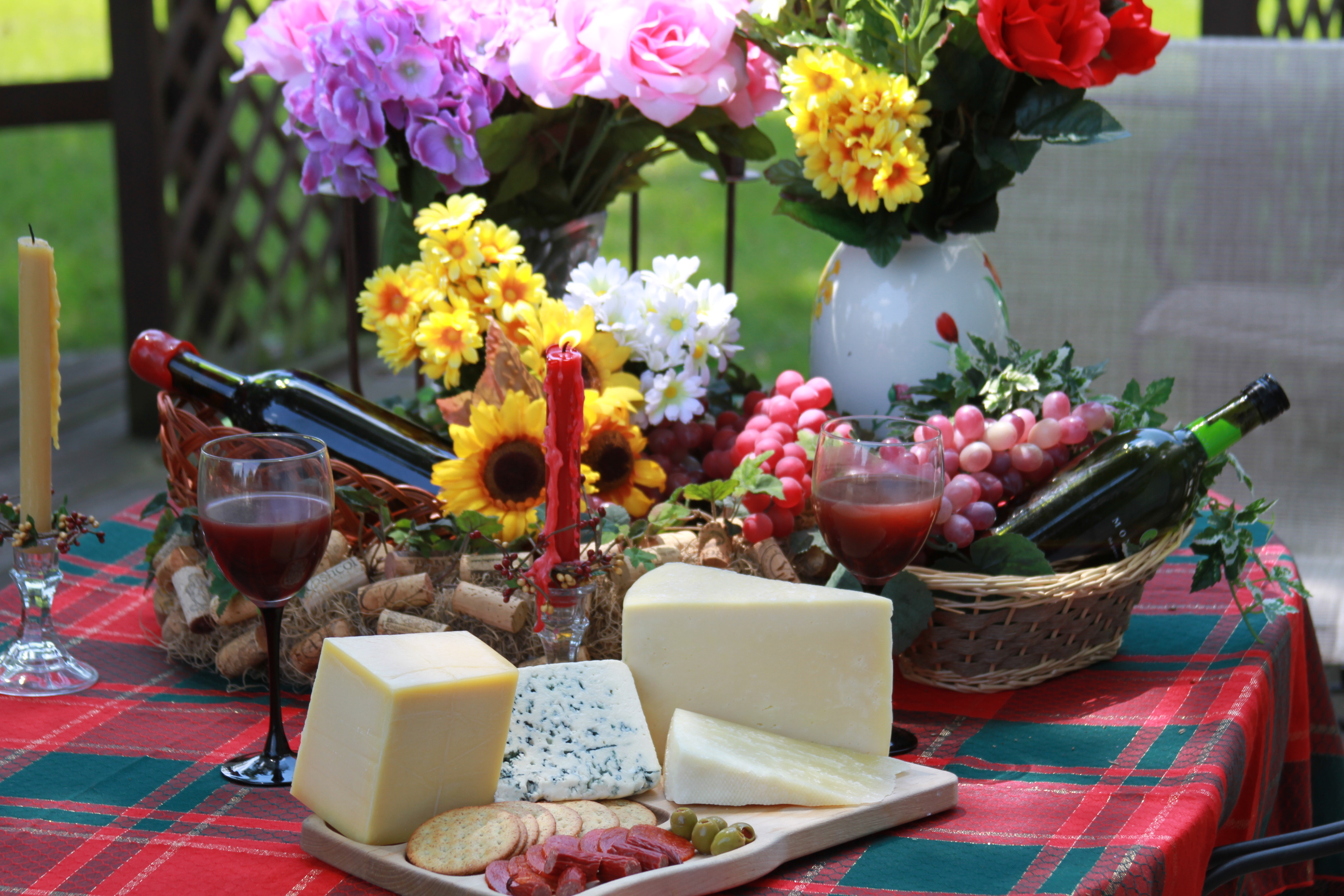 Wine Pairings with Cheese can be particularly challenging. One must select cheeses and wines that compliment each other perfectly without the flavors competing or overwhelming one another. So here is an alphabetical listing of 29 of the most popular cheeses in the United States and suggestions for wines that pair well with them. Keep in mind this list is not comprehensive. There are other wines that pair well with these cheeses. But these are the best matches in my humble opinion. This list should easily print to two pages so it can be used as a handy guide. Hopefully it will help you impress you friends at your next gathering. Click on any cheese to find more information and other pairing options.
Amish Butter Cheese – Chardonnay
Asiago Cheese – Beaujolais, Chardonnay, Cabernet Sauvignon, Chianti, Merlot. Pinot Noir, Riesling, Sauvignon Blanc, Syrah (Shiraz)
Baby Swiss– Asti Spumanti, Cabernet Sauvignon, Chardonnay, Dolcetto, Riesling, Sauvignon Blanc, Sparkling/Champagne, Vidal Blanc
Bacon Cheese– Baco Noir, Chardonnay, Cabernet Sauvignon, Merlot, Pinot Gris, Pinot Noir
Brick Cheese– Baco Noir, Gamay Noir(Beaujolais), Gewurztraminer, Pinot Gris, Zinfandel
Canadian Cheddar (Sharp) – Cabernet Franc, Cabernet/Merlot(Bordeaux), Cabernet Sauvignon, Chardonnay, Merlot, Rioja, Sauvignon Blanc, Pinot Gris, Pinot Noir, Syrah(Shiraz), Tempranillo, Zinfandel
New York Cheddar (Medium)– Cabernet Franc, Cabernet Sauvignon, Chardonnay, Gewurztraminer, Merlot, Pinot Gris,Pinot Noir
Colby Cheese– Chardonnay, Dry Champagne/Sparkling Wine, Gamay Noir(Beaujolais), Muscat, Riesling, Rose/Blush, Sauvignon Blanc
Danish Blue Cheese– Cabernet Franc, Cabernet/Merlot (Bordeaux), Cabernet Sauvignon, Desert Wines-(Icewine, Late Harvest Muscat, Riesling, Vidal Blanc, Viogniers), Maderia, Port-Tawney, Sherry
Farmer’s Cheese– Chardonnay, Gamay Noir(Beaujolais), Muscat, Pinot Noir, Reisling, Rose/Blush
Goat Cheese – Beaujolais, Chablis, Sancerre, Sauvignon Blanc, Tempanillo
Gouda– Beaujolais, Champagne/Sparkling Wine, Chardonnay, Pinot Gris, Riesling, Sauvignon Blanc
Gruyere– Beaujolais, Chardonnay, Cabernet Sauvignon, Merlot, Pinot Noir, Riesling, Syrah (Shiraz), Sauvignon Blanc
Havarti Cheese – Beaujolais, Cabernet Sauvignon, Merlot, Pinot Noir, Sauvignon Blanc, Zinfandel
Havarti with Caraway – Beaujolais, Cabernet Sauvignon Merlot, Pinot Noir, Riesling, Sauvignon Blanc, Zinfandel
Havarti with Dill– Cabernet Franc, Cabernet/Merlot (Bordeaux), Rioja, Tannat, Tempranillo
Horseradish Cheese– Gewurztraminer, Muscat, Pinot Noir
Marble Cheese– Baco Noir, Cabernet/Merlot(Bordeaux), Cabernet Sauvignon, Grenache, Merlot, Rose/Blush
Mozzarella– Beaujolais, Chianti
Muenster– Baco Noir, Gamay Noir(Beaujolais), Gewurztraminer, Pinot Gris, Zinfandel
Parmesan– Baco Noir, Cabernet Franc, Cabernet Sauvignon, Cabernet/Merlot(Bordeaux),Grenache,Sherry, Syrah (Shiraz), Zinfandel
Provolone – Beaujolais, Chardonnay, Chianti, Syrah (Shiraz)
Pepper Jack Cheese– Gewurztraminer, Pinot Noir, Sauvignon Blanc
Raclette – Fendant, Pinot Gris, Riesling, Savoie
Romano (Pecorino) – Cabernet Sauvignon, Chianti, Merlot, Zinfandel
Sharp Swiss– Cabernet Franc, Dolcetto, Gerwurztraminer, Grenache, Merlot, Muscat, Riesling, Vidal Blanc
Swiss Cheese – Beaujolais, Chardonnay, Cabernet Sauvignon, Merlot, Pinot Gris. Pinot Noir, Riesling, Sauvignon Blanc
Smoked Cheddar– Cabernet Franc,Cabernet/Merlot(Bordeaux), Cabernet Sauvignon, Grenache, Merlot, Pinot Gris, Pinot Noir, Syrah(Shiraz), Tempranillo, Zinfandel
Smoked Gouda – Chateauneuf-du-papa, Chianti, Garnacha, Merlot, Sangiovese, Syrah(Shiraz), Tempranillo
Most of the suggested wines should be available at your local wine and spirit store. Please feel free to give feedback on this list or additional wine pairing suggestions.
The Art of Cheesemaking
[youtube=http://www.youtube.com/watch?v=_hjYzEMf4ZY]
Here is a video demonstrating the difference in the Amish Cheesemaking process. Video footage courtesy of one of our principal local cheese suppliers, Guggisberg Cheese. Here are links to the cheeses described in this video:
Swiss Cheese
And you can find over 60 other cheeses, including several others produced by Guggisberg Cheese at: https://cheesehouse.com/cheese.aspx
Making Cheese The Amish Way
 We now live in a society whose greatest value has become productivity. We get our news from short sound bites from the internet or TV now instead of reading the paper. We rarely read books anymore. We listen to them while we are stuck in traffic, trying to get to work so we can get as much done in as little time as possible. The products we buy are made with the same goal in mind: maximum efficiency. But those who produce the few products that we still make in the U.S., whose ultimate goal is maximum efficiency, seem to have lost their standard of quality. They make it fast, but what happened to the concept of taking your time and doing it right? Some things just cannot be made fast without sacrificing quality.
One of those products is cheese. Mass produced cheeses all seem to have the same “tinny” metallic taste. That is because the manufacturers add chemicals to speed up the maturing process, but the residue from these chemicals creates that metallic aftertaste. The corporate manufacturers even rush the cows to produce more milk by injecting them with hormones and feeding them over processed feeds that are measured and distributed by computers. While these processes are efficient, we all agree that the quality suffers greatly.
Fortunately for cheese lovers, there is still a culture among us that believes in doing almost everything the old fashioned way: The Amish. Cheese making is a skill brought to Ohio by the earliest Swiss and German immigrants, and it still survives in Ohio Amish Country to this day.
Not only do the Amish have traditional knowledge and skill in the trade, there are numerous Amish dairy farmers in the area that provide the best possible milk. The cows are hormone free and they feed on natural grasses native to the valleys of northern Ohio that have never been sprayed with pesticides. The average Amish farm has only ten cows, so they can be more closely monitored. The milk is delivered to the cheese makers in numbered cans that can be traced back to the exact farm, and even the exact cow it came from. This provides a quality control system that prevents any sub-standard milk from entering the supply, but does not affect the distinctive Amish farming methods.
Cheese making is an art and a science, so some modern technology has been added to the final cheese production process to ensure a sanitary and healthful product. But the technology has all been carefully introduced so as not to affect the quality of the cheese. The milk is pasteurized to prevent the introduction of any foreign bacteria. The cheese is now made in stainless steel vats as they are easier to clean and more sanitary than the old copper kettles. The enzymes that are introduced to form the cheese curds are now more carefully measured to ensure the highest quality. No chemical preservatives are added, but the individual pieces of cheese are vacuum packed and refrigerated after the aging process is complete to ensure the cheese stays fresh until it makes its way to your table. All of this ensures an unmatched standard of quality.
Most Amish made cheeses have a cream content level of up to 33% milk fat, which is high compared to mass-produced cheeses, but that’s what makes them so creamy and full flavored. The cheeses are refrigerated during storage, but are best served at room temperature. There are over 50 flavors of cheese that are made in Ohio’s Amish country. The most notable are Amish Swiss, Sharp Swiss, Baby Swiss, Amish Butter Cheese, Colby, Farmers Cheese, Jack Cheese, Marble (Colby Jack), and Yogurt Cheese. They also produce numerous variations of each including smoked varieties and cheeses infused with peppers, onions, and bacon to name a few. A byproduct of the cheese making process is also butterfat, which is used to make Amish Butter, the best butter most will ever taste.
But the Amish level of patience and dedication does not only apply to dairy products. Their religion discourages them from worldly pursuits, so their ultimate goal in everything they do is perfection rather than profit. Their patience and dedication is evident in their other specialty foods including fruit preserves, pickled vegetables, and the specialty meats that they inspired. Anyone who has ever visited Ohio’s Amish Country has most likely seen the top quality bedding and furniture they have also become famous for.
For the cultural tourist, Ohio’s Amish Country is a must see. The cheese connoisseur need not leave his/her own living room. All of the cheeses and other delicacies mentioned are available over the Internet. But nothing compares to actually visiting and seeing the labor of love firsthand.

Lacey Baby Swiss
Baby Swiss is another of our local selections, made in Charm, Ohio by the original producer Guggisberg Cheese. Some of Our other Signature local cheeses include Swiss, Sharp Swiss, Amish Butter Cheese, Yogurt Cheese, and several variations of each.Lacey Baby Swiss is a young, semi-soft cheese distinguishable by its myriad of small holes. Baby Swiss is closely related to Swiss cheese, made by substituting water for the milk’s whey to slow bacterial action, Lacey Baby Swiss has smaller holes and a milder flavor. Lacey Baby Swiss has a delightfully creamy and mild taste, but a lower calorie and sodium content than the original.
Smoked Baby Swiss is also available, along with Baby Swiss for those who prefer the original version.
History of Lacey Baby Swiss
Baby Swiss originated in 1967 just outside of Charm, Ohio, and was invented by cheese connoisseur Alfred Guggisberg, an alumnus of the famous Swiss Federal “Molkereishulle” (cheese maker’s institute). The name Baby Swiss was coined by Alfred’s wife, Margaret Guggisberg, who thought that in comparison to the larger wheels of traditional Swiss cheese, when placed side by side, the new cheese looked like a baby. While Lacy Baby Swiss is produced in the same area and was inspired by the original Baby Swiss, it is not produced by Guggisberg Cheese. Guggisberg’s lower fat and sodium cheese is Lucerne Cheese.

Lacey Baby Swiss Nutritional Information
Wine Pairing for Lacey Baby Swiss
Like its close relative Swiss cheese, Lacey Baby Swiss pairs very well with numerous wines. The most popular pairings are Cabernet Sauvignon and Merlot. Beaujolais and Pinot Noir are also great matches. If you prefer white wine, Chardonnay, Riesling, and Sauvignon Blanc pair well with Lacey Baby Swiss. And for the beer lover, Lacey Baby Swiss goes well with Lager, Pale Ale, and Weiss Beer.

Troyer’s Trail Bologna With Hot Pepper Cheese
The Original Troyer’s Trail Bologna with Hot Pepper Cheese
For three generations we at Shisler’s Cheese House have prided ourselves on providing the best examples of local fare to tourists and locals alike. Troyer’s Trail Bologna is one of the best examples of local fare we can recommend. Our Trail Bologna comes from the fourth generation of the Troyer family. Don’t be fooled by imitators. There is only one Troyer’s Trail Bologna, made in Trail, OH and sold exclusively by Ohio retailers.
Now, thanks to the internet, Troyer’s Trail Bologna is available nationwide!
Troyer’s Trail Bologna rings make great gifts, either individually, or they are included in four of our Gift Boxes: Trail Bologna and Cheese, Baby Swiss Cheese and Trail Bologna, Amish Country Sampler, and The Cheesehouse Special.
Description of Troyer’s Trail Bologna with Hot Pepper Cheese
A chunky bologna, made with coarse cuts of meat. Trail Bologna originates from the Troyer family in a tiny town of Trail, Ohio. One of the best flavors of Amish Country! Enjoy the smoky taste of Trail Bologna.
Not to be mistaken for the common Venison Trail Bologna, which was inspired by the original. Troyer’s Trail Bologna is all beef.
Trail Bologna is usually sliced fairly thin and served on a platter with cubes of cheese.
History of Troyer’s Trail Bologna with Hot Pepper Cheese
Trail Bologna was named after Trail, a village in Ohio that is too small to have a zip code of its own. The Troyer family has been making their quality wood-smoked Trail Bologna here for four generations.
Starting in 1912, Michael Troyer created a unique blend of special seasonings to make his now famous all-beef Trail Bologna. The family continues the tradition of excellence to this day by making literally tons of the savory treat daily.
Though obviously no longer hand-stuffed, modern production methods have not altered the quality. It continues to be authentically wood-smoked for the same old fashioned good tasting Trail Bologna.


Havarti Cheese With Caraway
Havarti Cheese or Cream Havarti (Fløde Havarti in Danish) is a semi-soft Danish cow’s milk cheese. It is a table cheese that can be sliced, grilled, or melted. Havarti Cheese is made like most cheeses, by introducing rennet to milk to cause curdling. The curds are pressed into cheese molds which are drained, and then the cheese is aged. Havarti is a washed curd cheese, which contributes to the subtle flavor of the cheese.
Havarti Cheese is an interior-ripened cheese that is rindless, smooth and slightly bright-surfaced with a cream to yellow color depending on type. It has very small and irregular openings (“eyes”) distributed in the mass. Havarti Cheese has a buttery aroma and can be somewhat sharp in the stronger varieties, much like Swiss cheese. The taste is buttery, and from somewhat sweet to very sweet, and it is slightly acidic. It is typically aged about three months, though when Havarti Cheese is older it becomes more salty and tastes like hazelnut. When left at room temperature the cheese tends to soften quickly.
This variation of Havarti Cheese is infused with Caraway Fruits, commonly referred to as Caraway seeds, which are the principle element in the flavor of rye bread. The result is a pungent anise-like flavor and aroma combined with the rich and buttery flavor of Havarti Cheese. Plain Havarti Cheese and Havarti Cheese with Dill are also available. Havarti is also very similar in texture and flavor to our locally made Amish Butter Cheese.
History of Havarti Cheese
Havarti cheese was initially created by Hanne Nielsen who operated an experimental farm called Havarthigaard, in Øverød, north of Copenhagen, in the mid-19th century.

Wine Pairing for Havarti Cheese
Havarti Cheese Pairs well with several reds including Beaujolais, Cabernet Sauvignon, Pinot Noir, Merlot, and Zinfandel. If you prefer white wine, Sauvignon Blanc pairs well with Havarti Cheese. For beer drinkers, Havarti Cheese is nicely complimented with any Pilsner or Stout.

Havarti Cheese
Havarti Cheese or Cream Havarti (Fløde Havarti in Danish) is a semi-soft Danish cow’s milk cheese. It is a table cheese that can be sliced, grilled, or melted. Havarti Cheese is made like most cheeses, by introducing rennet to milk to cause curdling. The curds are pressed into cheese molds which are drained, and then the cheese is aged. Havarti is a washed curd cheese, which contributes to the subtle flavor of the cheese.
Havarti Cheese is an interior-ripened cheese that is rindless, smooth and slightly bright-surfaced with a cream to yellow color depending on type. It has very small and irregular openings (“eyes”) distributed in the mass.
Havarti Cheese has a buttery aroma and can be somewhat sharp in the stronger varieties, much like Swiss cheese. The taste is buttery, and from somewhat sweet to very sweet, and it is slightly acidic. It is typically aged about three months, though when Havarti Cheese is older it becomes more salty and tastes like hazelnut. When left at room temperature the cheese tends to soften quickly. Flavoured variants of Havarti Cheese are also available, such as caraway and dill. Havarti is also very similar in texture and flavor to our locally made Amish Butter Cheese.
History of Havarti Cheese
Havarti cheese was initially created by Hanne Nielsen who operated an experimental farm called Havarthigaard, in Øverød, north of Copenhagen, in the mid-19th century.
Wine Pairing for Havarti Cheese
Havarti Cheese Pairs well with several reds including Beaujolais, Cabernet Sauvignon, Pinot Noir, Merlot, and Zinfandel. If you prefer white wine, Sauvignon Blanc pairs well with Havarti Cheese. For beer drinkers, Havarti Cheese is nicely complimented with any Pilsner or Stout.

Gruyere Cheese
Gruyere (groo-yair) is one of our favorite imported cheeses. Some call it a French cheese while others insist it is from Switzerland. It originated in the Alpine region between Switzerland and France in the eleventh century.Gruyere Cheese is sweet but slightly salty. It has a flavor that varies widely with age. It is often described as creamy and nutty when it is young, becoming more assertive with age , earthy, and complex. When fully aged (five months to a year) it tends to have small holes and cracks which impart a slightly grainy mouthfeel.
Gruyere cheese is generally known as one of the finest cheeses for baking, having a distinctive, yet not overpowering taste. In quiche, gruyere cheese adds savoriness without overwhelming the other ingredients. It is a good melting cheese, particularly suited for fondues, along with Vacherin and emmental (commonly known Swiss cheese). It is also traditionally used in French onion soup, as well as in croque monsieur, a classic French toasted ham and cheese sandwich. Gruyere cheese is also used in chicken and veal cordon bleu. It is a fine table cheese, and when grated, it is often used with salads and pastas. It is used, grated, atop le tourin, a type of garlic soup from France which is served on dried bread.
History of Gruyere Cheese
While gruyere cheese is often designated as a French Cheese, it actually originated in Switzerland. It was named after the town of Gruyères in Switzerland, and originated in the cantons of Fribourg, Vaud, Neuchâtel, Jura, and Berne. Before 2001, when gruyere cheese gained Appellation d’Origine Contrôlée (AOC) status as a Swiss cheese, some controversy existed whether French cheeses of a similar nature could also be labeled Gruyere cheese. (French gruyere-style cheeses include Comté and Beaufort.) French gruyere-style cheeses must have holes according to French agricultural law, whereas holes are usually not present in Swiss gruyere.
Wine Pairing for Gruyere Cheese
Beaujolais, Cabernet Sauvignon, Pinot Noir, Merlot, and Syrah are all good red wines to pair with gruyere. White wines, such as Riesling and Chardonnay, pair well with gruyere. Sparkling apple cider and Bock beer are also beverage affinities.

Brick Cheese
Brick Cheese is made in the form of a large rectangular or brick shape, but may also be named “brick” because the cheese curds are pressed with clay-fired bricks. The color ranges from pale yellow to white, and the cheese has a sweet and mild flavor when young, and matures into a strong ripe cheese with age. It is medium-soft, crumbles easily and is somewhat sticky to the knife. Brick Cheese is well suited to slicing for sandwiches, specifically grilled cheese sandwiches, or appetizers and also melts very well. Brick Cheese is often served with corn polenta in the Midwest, where it is thinly sliced and melted underneath the polenta and then topped with tomato sauce.
History of Brick Cheese
Brick Cheese is actually an American original produced in Wisconsin. The cheese making process was derived from white American Cheddar that is cultured at a slightly higher temperature which results in a marginally higher fat content and a slightly altered protein structure. The resultant brick cheese has a slightly softer taste and a distinctly sharper finish.
Brick Cheese was created in 1877 by John Jossi, a Swiss-born American cheese maker. Jossi came to the states in 1857 from Switzerland with his parents at the age of 12. The family settled first in upstate New York, but later Jossi moved to Richwood, in southwest Wisconsin. He envisioned a cheese made with curd that was drier then that used for the Limburger he had produced in the factories he worked in. He came up with the idea of using bricks to press the cheese, which of course was formed into a brick shape.

Wine Pairing for Brick Cheese
Beaujolais, Pinot Noir, Merlot, and Syrah are all good red wines to pair with brick cheese. White wines, such as Chardonnay and Sauvignon Blanc pair well with brick cheese. Brick Cheese is also a popular choice for beer lovers as it pairs well with Bock, Lager, Porter, or Stout.
Need More Information On Brick Cheese ?
| If you like this item you may also like: |

