
Category: Cheese Glossary
Earthy Cheese: The Connoisseur’s Guide to Rich Flavors
Exploring the Deep, Complex World of Rich, Earthy Cheese: A Connoisseur’s Guide
There is something profoundly magical about the first bite of a truly exceptional, rich, earthy cheese. While mild, milky fresh cheeses certainly have their place on the summer table, it is the robust, deeply savory, and terroir-driven wheels that capture the hearts of true culinary adventurers.
Characterized by complex notes of damp forest floors, wild mushrooms, toasted nuts, roasted root vegetables, and deep umami, earthy cheeses offer a completely edible landscape. They tell the story of the soil, the grass, the cave, and the traditional craftsmanship of the cheesemaker.
Whether you want to elevate your next gourmet cheese board, curate the ultimate wine and cheese pairing, or simply satisfy your craving for bold, rustic flavors, this comprehensive guide dives deep into the universe of rich, earthy cheese.

What Makes a Cheese “Earthy”?
To truly understand earthy cheese, we have to look closely at the science of terroir and affinage (aging). Just like fine wine, cheese actively reflects its environment through three primary pillars:
-
The Milk: Animals grazing on wild pastures, alpine herbs, and diverse grasses produce milk with complex flavor precursors. Sheep and goats often contribute gamey, robust undertones, while rich cow’s milk delivers buttery density that carries deep savory notes.
-
The Microflora and Rinds: Many earthy cheeses feature natural rinds cultivated by specific molds, yeasts, and bacteria. Washed-rind cheeses and natural-rind blues develop earthy, fungal profiles—reminiscent of fresh chanterelles, moss, and autumn leaves.
-
The Aging Process: As moisture evaporates over months or years, proteins break down. This process concentrates flavors, yielding deep umami, savory broths, and crunchy tyrosine crystals that contribute to a multi-layered sensory experience.
Iconic Varieties of Earthy, Rich Cheeses
The world of specialty dairy is vast, but certain styles reign supreme when it comes to rich, umami-rich profiles. Here are the varieties every cheese lover should explore:
1. Alpine-Style Cheeses (Comté, Gruyère, Appenzeller)
Hailing from the high-altitude mountain ranges of France, Switzerland, and Austria, Alpine cheeses are legendary. Made from raw cow’s milk when cattle graze on lush summer pastures, these cheeses are aged patiently in mountain caves.
-
Flavor Profile: Nutty (think toasted hazelnuts and brown butter), sweet, and intensely earthy with distinct hints of wild mushroom, roasted onion, and broth.
-
Texture: Dense, smooth, and occasionally crystallized.
2. English Stilton and Artisan Blues
While many blue cheeses can be sharply pungent, styles like traditional British Colston Bassett Stilton lean heavily into a rich, savory, and damp-earth profile rather than pure sharp acidity.
-
Flavor Profile: Deeply savory, robust, peppery, and mushroomy, balanced by a creamy, buttery mouthfeel.
-
Texture: Rich, crumbly, and velvety.
3. Aged Gouda (Boerenkaas)
Young Gouda is notoriously mild and creamy, but true aged Goudas (matured for 18 to 36 months) undergo a miraculous transformation.
-
Flavor Profile: Brimming with butterscotch, toasted pecans, deep caramel, and an underlying earthy mushroom funk.
-
Texture: Extremely firm, granular, and packed with satisfying crunch crystals.
4. Washed-Rind Stinkers (Taleggio, Époisses, Limburger)
Do not let the aroma intimidate you; the washed-rind family delivers some of the most decadent, rich eating experiences in the world. Rinds are regularly washed with brine, beer, or wine, fostering friendly bacteria that create a savory, meaty depth.
-
Flavor Profile: Brothy, meaty, intensely mushroomy, and rustic.
-
Texture: Luscious, gooey, and spoonable at room temperature.
How to Build the Ultimate Earthy Cheese Board
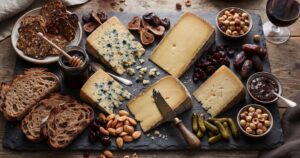
Designing a charcuterie and cheese board centered around rich, earthy cheese requires careful balancing. Because these selections pack a powerful punch, you want accompaniments that complement rather than compete with their complexity.
-
The Foundation: Opt for dense, rustic sourdoughs, walnut-raisin bread, or seeded rye crackers. Their hearty grains echo the earthy notes in the cheese without overwhelming them.
-
Sweet Accompaniments: Dried figs, dates, and tart cherries cut through the rich, fat-heavy profile of aged cheeses.
-
Honey and Preserves: A drizzle of dark buckwheat honey or a dollop of fig jam adds a sweet contrast to funky blues and nutty Alpines.
-
Savory Elements: Toasted Marcona almonds, hazelnuts, or pickled cornichons add necessary crunch and acidity to cleanse the palate between rich bites.

Perfect Wine and Beverage Pairings
Pairing wine and beer with rich, earthy cheese is an art form. The primary goal is to match the intensity of the cheese with a beverage that can cut through its fat and highlight hidden flavor notes.
-
Bold Red Wines: Full-bodied reds like Barolo, Nebbiolo, Cabernet Sauvignon, or a rustic Chianti Classico stand up brilliantly to the intense umami of aged Goudas and Alpine cheeses.
-
Sweet and Fortified Wines: Port, Sherry, and Sauternes are classic companions for rich blue cheeses and washed-rind varieties. The residual sweetness tames the salt and funk, creating a luxurious harmony.
-
Craft Beers: Robust dark beers like oatmeal stouts, porters, and Belgian Trappist ales are phenomenal with earthy cheeses. The roasted malt characteristics mirror the mushroomy profiles of the cheese seamlessly.
Culinary Uses: Cooking with Earthy Cheese
While these cheeses shine brightly on a grazing board, they can also transform simple home-cooked meals into gourmet masterpieces.
-
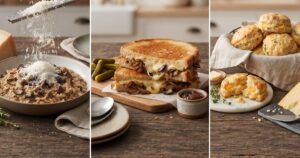
Grated Over Pasta: Swap standard parmesan for an aged Pecorino Romano or a long-aged Alpine cheese over wild mushroom risotto or handmade truffle pasta to amplify the umami factor.
-
Elevated Grilled Cheese: Combine sharp aged cheddar or a melting slice of Gruyère with caramelized onions and wild mushrooms for the ultimate gourmet comfort food.
-
Savory Baking: Fold chunks of nutty, aged Gouda into artisanal bread dough or savory scones alongside fresh thyme.

Final Thoughts
Embracing rich, earthy cheese is an invitation to slow down and savor the craftsmanship of food history. From damp, misty European cellars to local artisanal creameries crafting small-batch wheels, these cheeses offer an unmatched sensory journey.
Next time you visit your local cheese monger, step away from the familiar mild blocks and ask to sample something aged, bold, and unapologetically earthy. Your palate will thank you.
Our Favorite Cheese Words!
Now that we’ve come to the end of our cheese glossary, we thought we’d share which of the words we shared with you were our favorite!

Affineur
This very fancy term indicates a person who ages cheese. They will decide when it is perfectly ripe and ready for you to eat.
Burrata – this is such a delicious cheese that you must try!
A fresh Italian cheese made from mozzarella and cream. It has an outer shell of mozzarella, filled with stracciatella and cream. Stracciatella is a cheese made from Italian buffalo milk and is made up of small, creamy shreds.
Friable
This means a cheese that crumbles easily.
Grana
This comes from the Italian word for grain and refers to a group of hard, grainy cheeses. These include Asiago, Grana Padano and Sapsago.
Hooping
The process of putting fresh curds into mold forms.
Kashta
A very creamy cheese originating from the Middle East. It is sometimes baked or simply eaten with honey. This cheese is almost a dessert!
Limburger – such an unusual cheese and another must-try!
Limburger is rated as one of the stinkiest cheeses in the world! It is a spreadable cheese with an almost bitter flavor. A rind washed cheese, it has a distinct brown-colored rind with semi-soft, ivory cheese inside. It can be quite mild but it also has a distinct grassy and mushroom taste. The aftertaste has a tang to it.
The bacteria Brevibacterium linens causes the odor and the maturing process which creates Limburger. When it is young it has a firm, crumbly texture with a salty flavor, like feta. At six weeks, the edges soften but the center stays firm. By two months it is almost all smooth and creamy and by three months it develops its intense smell and flavor. Limburger originated in the historical Duchy of Limburg, which is now divided between modern-day Netherlands, Belgium, and Germany. However, most Limburger today comes from Germany. Only one company in the United States still makes it, the Chalet Cheese Cooperative of Monroe, Wisconsin. We’re proud to source our Limburger Cheese from Wisconsin.
Marbled
Marbled cheese is usually a blend of Monterey Jack and Colby cheese, marbled together to create a striking effect. Monterey Jack is a buttery, semi-firm cheese that originated in California. It is usually only aged for around a month, making it a fresh, fairly soft cheese to enjoy.
Ovolini
A ball of fresh mozzarella, weighing approximately four ounces.
Stirred-curd Cheese
These are sometimes called granular cheeses. They are made in a similar way to cheddar cheese but do not go through the cheddaring and milling process. It tends to have a higher moisture level than other cheeses. The granular aspect comes from the open look to the
cheese.
Terroir
This French term denotes the effects that geography and different environments have on food. It is particularly used in reference to cheese and wine. It includes climate, soil, and terrain, as well as the techniques used in growing. These may be based on a particular tradition.
Umami
The fifth taste after sweet, sour, salty and bitter, which is often equated with a savory taste. This was first identified in Japan but is now used worldwide. It is often found in mature, aged cheeses.
Xynomizithra
A Greek sheep and/or goat whey cheese that is made on the island of Crete. It is a soft, white and creamy cheese that has a sour taste. It is commonly served with honey as a dessert.
We hope you enjoyed the cheese glossary! Which was your favorite word? Let us know in the comments below!
Cheese Glossary: The Letters V, W, X, Y and Z!
The time has come; we’ve reached the end of our cheese glossary! Read on to find the cheese terms you need to know from the letters V, W, X, Y, and Z.

Vegetable Rennets
These are rennets extracted from organic sources such as thistles, nettles, or fig leaves.
Washed Curd
A cheesemaking process in which the curds are drained of whey before being rinsed with water and then stirred to rinse off any lactose that natural bacteria might convert to acid. This raises the moisture level and can hasten the aging process for the curd. One example of a washed curd cheese is Colby.
Washed Rind
This refers to cheeses that have been washed in liquids such as brine, whey, beer, cider,
wine, brandy or oil during the ripening process. This keeps the rind moist and encourages growth of an orange bacteria, which can be scraped off, dried, or left to develop into a full rind. One example of a washed rind cheese is Limburger.
Waxed
A cheese covered in wax. This is done for preservation but also creates a distinctive look for cheeses. Many have a specific wax color.
Waxy
A classification of cheese texture.
Weeping
Swiss-type cheeses that release some moisture from their ‘eyes’ may be said to be ‘weeping’.
Whey
The thin, watery part of milk. It separates from the curds when heated and is usually drained away, although some cheeses use the whey in the production of the cheese.
Xynomizithra
A Greek sheep and/or goat whey cheese that is made on the island of Crete. It is a soft, white and creamy cheese that has a sour taste. It is commonly served with honey as a dessert.
Yaroslavsky
A Russian hard cow’s milk cheese with a slightly sour taste.
Yeast
Yeast are single-celled fungi. There are currently 1,500 discovered species. Yeast can be used to change the flavor and texture of cheeses during surface ripening, as well as affecting the aroma of cheese.
Zakusochny
A Russian soft, blue, cow’s milk cheese.
Zufi
An Italian cow’s milk cheese similar to ricotta that is made in Piedmont.
What was your favorite term from the cheese glossary? Let us know in the comments below! What would you like to learn about next?
The Cheese Glossary: The Letters T and U
We continue our cheese glossary with the letters T and U!

Terroir
This French term denotes the effects that geography and different environments have on food. It is particularly used in reference to cheese and wine. It includes climate, soil, and terrain, as well as the techniques used in growing. These may be based on a particular tradition.
Texture
Texture refers to the ‘feel’ of cheese, both in the eating experience and the cutting. Cheese textures can include smooth, grainy, open or closed, creamy, flaky, dense, or crumbly.
Thermalized
Milk that has been treated at temperatures higher than 160F for less than 15 seconds. It is less temperature and time than pasteurization. It is often used in the production of blue cheese.
Thermophilic Cultures
Common cheesemaking cultures that work at temperatures above 100°F.
Triple cream
Cheeses that have more than 72% butterfat content. They are very rich and creamy, as you would expect, and pair well with fruit and wine to cut through the richness.
Turophile
If you’re reading our blog then you are probably a turophile! This term means a cheese lover. It comes from the Greek turos, for cheese, and phil, for love.
Umami
The fifth taste after sweet, sour, salty and bitter, which is often equated with a savory taste. This was first identified in Japan but is now used worldwide. It is often found in mature, aged cheeses.
Unripened
Cheeses that have not been aged. They are sometimes called fresh cheeses and include cheeses such as mozzarella.
You can see our other cheese glossary posts here. We’ve come all the way through the alphabet and we’ll be carrying on through so that you’ll learn about cheese from A to Z!
What has been your favorite thing to learn from the cheese glossary? Let us know in the comments below!
Cheese Glossary: The Letter S

Salting
The process of adding salt to cheese! Salt can be added when the cheese is still in curd form or it can be rubbed on after the cheese is pressed, depending on which cheese it is. A salt solution can also be used. This is known as brining. Whilst some of the flavor of cheese is achieved through salting, the process also preserves the cheese.
Semi-hard
Cheeses vary from hard to soft based on their body and texture. Cheddar and Swiss are examples of semi-hard cheeses.
Semi-soft
Semi-soft cheeses are usually made from whole milk and melt when heated.
Sharp
A flavor term referring to the fully developed flavor of aged cheeses. Cheeses that might be sharp include Cheddar, Provolone and blue-veined cheeses like Danish Blue.
Smoked
Smoked cheese is produced in a similar way to smoked meats. There are various ways to do this including adding smoking over wood or adding liquid smoke to brine. We stock a wide variety of smoked cheeses.
Soft
Cheeses with a high moisture content. They are usually set with the addition of lactic acid cultures and include cheeses such as cottage cheese, mascarpone, and ricotta.
Soft-ripened
These cheeses, such as Brie and Camembert, have a thin white or cream rind that is soft and edible. They are usually soft inside and have a luscious, creamy texture.
Stabilizer
An ingredient added to products, including cheese, to improve consistency and texture.
Starter
A culture that normally has varying percentages of lactic acid, bacteria or mold spores, enzymes or other microorganisms and natural chemicals. Starter cultures control the process of curdling milk during cheesemaking by converting lactose to lactic acid. They can also give the cheese particular flavor and characteristics.
Stirred-curd Cheese
These are sometimes called granular cheeses. They are made in a similar way to cheddar cheese but do not go through the cheddaring and milling process. It tends to have a higher moisture level than other cheeses. The granular aspect comes from the open look to the
cheese.
Stretched
Cheeses that have stretched curds are kneaded with hot water, which gives them a fibrous structure. The most common example would be mozzarella.
Surface-ripened
Cheeses that ripen from the outside in when a mold, yeast or bacteria is applied to the surface.
Swiss
A holey, semi-hard cheese with a creamy color, Swiss cheese has a nutty, slightly piquant flavor whilst simultaneously being somewhat creamy. The process of making Swiss cheese involves natural bacteria consuming the lactic acid in the cheese. This releases carbon dioxide gas, which forms bubbles that become the holes in the cheese. These are often referred to as “eyes”.
We hope that you continue to enjoy our cheese glossary!
Cheese Glossary: The Letters Q and R
A treat for you today: two letters from our cheese glossary!

Quarter Wheel
A quarter of a 20-pound wheel of cheese.
Queso
The Spanish word for cheese.
Raclette
Raclette (ra-klet) is a semi-firm, salted cheese made from cow’s milk. It originated in the Swiss canton of Valais, but is today also produced in the French regions of Savoie and Franche-Comté. The term raclette derives from the French racler, meaning “to scrape”. Raclette cheese is heated, either in front of a fire or by a special machine, then scraped onto diners’ plates.
Raclette is mentioned in medieval writings and was then known in the German-speaking part of Switzerland as Bratchäs, or “roasted cheese.” Traditionally, the Swiss cow herders used to take the cheese with them into the mountains. They would cook it by the campfire and scrape it onto bread. Now, electric table-top grills with small pans make the job of melting the cheese easy and fun. Each guest fills their small pan, known as a coupelles, with cheese and melts it before adding it to their plate.
Raw milk
This is simply the term for milk that has not undergone pasteurization.
Rennet
This comes from the membranes of calves’ stomachs and contains rennin, an enzyme. This aids in coagulating milk or separating curds from whey. There are also vegetarian forms of rennet that can be commercially produced from fungi.
Rind
The outer surface of the cheese. Rind can vary from soft to hard as well as in thickness and color. Natural rinds exist but some are produced from a harmless mold.
Rindless
Cheese without a rind. Some of these are not ripened so they won’t develop a rind and others are protected with a coating or plastic film.
Ripening
The aging process that cheese goes through.
Rustic
A term for cheeses that are earthy in flavor and aroma.

Cheese Glossary: The Letters N and O
We return to our cheese glossary for the letters N and O!

Natural
A general term for cheese that has been made directly from milk, whether it is pasteurized or unpasteurized. It can also refer to the cheesemaking process itself of coagulating or curdling the
milk, stirring and heating the curd, draining the whey and collecting or pressing the curd.
Natural Rind
A rind that forms naturally on cheese whilst it is drying and ripening. Ripening agents or washing are not used to create the natural rind. Most semi-hard and hard cheeses will have this, including Parmesan and Romano Pecorino.
Nutty
Cheeses with a nut-like flavor, such as Swiss cheeses.
Oily
This can describe the body, flavor or aroma of a cheese.
Open
A term applied to cheese varieties containing small holes that develop during the manufacturing process. These holes may be small or large, densely patterned or randomly scattered, and irregular in shape. Air might be introduced through punctures made with steel pins, such as in the production of blue-veined cheeses. These pin holes are not the same as the open ‘eyes’ that form during fermentation of cheeses such as Swiss cheese.
Organic
Grown without the use of chemical pesticides or fertilizers.
Overripe
A cheese that has gone past its best. It has likely become too soft.
Ovolini
A ball of fresh mozzarella, weighing approximately four ounces.
Oxidation
This can cause cheese to become bleached or dry, depending on how it has been packaged.
We have come to the halfway point of our cheese glossary and we are really enjoying teaching you all about the different terms associated with cheese. We hope it is helping you to learn more about the cheeses that you love. What would you like to learn about next? Let us know in the comments below and we will make it the focus of our next set of posts!
Cheese Glossary: The Letter M
Another letter for our cheese glossary today!

Manchego
Manchego is a sheep’s milk cheese from Spain. The shape of Manchego cheese is very characteristic and defined. It has an intense taste and crumbly texture which makes it perfect for eating alone. It has a rich golden color and small holes. It is traditionally made with grass molds so it has a very distinctive zigzag pattern on the cheese. It appears as a herringbone pattern n the rind, which is inedible.
The rich, semi-firm product is aged in natural caves for two to six months, giving it a zest and exuberant flavor. It is always aged for a minimum of two months. There are significant changes in the flavor over time and sometimes in Spain, you will see it served in a variety of ages.
Manchego cheese is made in the La Mancha region of Spain. It has a long historical and literary tradition, as it was mentioned by Cervantes in the legendary “Don Quixote of La Mancha”.
It is made from the whole milk of the Manchega sheep, which are only bred in the La Mancha region. Archaeological remains show that a cheese like Manchego may have been made as far back as the Bronze Age.
Marbled
Marbled cheese is usually a blend of Monterey Jack and Colby cheese, marbled together to create a striking effect. Monterey Jack is a buttery, semi-firm cheese that originated in California. It is usually only aged for around a month, making it a fresh, fairly soft cheese to enjoy.
Medium-aged
A semi-hard or hard cheese that has usually been aged for three to six months.
Mozzarella
Mozzarella is a semi-soft cheese. Due to its high moisture content, it is traditionally served the day after it is made, but can be kept in brine for up to a week or longer when sold in vacuum-sealed packages.
Derived from the Neapolitan dialect spoken in Campania, mozzarella is the diminutive form of mozza (“cut”) or mozzare (“to cut off”) derived from the method of working. The term is first mentioned in 1570, cited in a cookbook by Bartolomeo Scappi, reading “milk cream, fresh butter, ricotta cheese, fresh Mozzarella, and milk”.
Citric acid and milk are combined and then heated until the mixture is ready to have rennet added. At this point, the curds and whey will have separated and the curds will be cut. They are the removed, stretched and kneaded until they become the cheese that we recognize.
Muenster
Muenster cheese is a mild, white cheese with a reddish-orange rind made from paprika. This can be eaten but is often cut off. It is semi-firm in texture with a mild smell that stronger as it ages. Muenster cheese is currently made in Germany, France, and the United States. It was originally made by Benedictine monks that migrated to the Alsace region of France. The cheese was created to save milk and feed numerous people. The original name “munster” comes from the word monastery. Authentic French Muenster cheese is made from the milk of cows that graze in the Vosges mountains of eastern France. Today, farmers still use traditional methods of cheese-making.
Are you enjoying learning about cheese? Let us know in the comments!
Cheese Glossary: The Letter L
It’s time to return to the cheese glossary. Onto the letter L!

Lactose
A type of sugar found naturally in milk.
Lacy Swiss
Lacy Swiss was invented by Alpine Lace Brands in 1985 in response to the growing need for healthier alternatives. This cheese is closely related to Swiss cheese, but the whole milk used to produce swiss cheese is replaced with low fat milk to provide a healthier alternative with a lower fat content. It gets its name from the lacy appearance of the slices, which usually have a creamy, ivory color to them. It has a delightfully light and nutty flavor. If you follow a lactose-free diet, then this cheese is naturally free of lactose.
Lacy Baby Swiss
Lacy Baby Swiss is a young, semi-soft cheese distinguishable by its myriad of small holes. Baby Swiss is made by substituting water for the milk’s whey to slow bacterial action compared to a traditional Swiss Cheese. The Lacy version has smaller holes and a milder flavor, as well as the lower fat and sodium content found in Lacy Swiss.
Limburger
Limburger is rated as one of the stinkiest cheeses in the world! It is a spreadable cheese with an almost bitter flavor. A rind washed cheese, it has a distinct brown-colored rind with semi-soft, ivory cheese inside. It can be quite mild but it also has a distinct grassy and mushroom taste. The aftertaste has a tang to it.
The bacteria Brevibacterium linens causes the odor and the maturing process which creates Limburger. When it is young it has a firm, crumbly texture with a salty flavor, like feta. At six weeks, the edges soften but the center stays firm. By two months it is almost all smooth and creamy and by three months it develops its intense smell and flavor. Limburger originated in the historical Duchy of Limburg, which is now divided between modern-day Netherlands, Belgium, and Germany. However, most Limburger today comes from Germany. Only one company in the United States still makes it, the Chalet Cheese Cooperative of Monroe, Wisconsin. We’re proud to source our Limburger Cheese from Wisconsin.
Lipolysis
This refers to a process that takes place during cheesemaking. Milk contains a fat (or lipid) called triglyceride. Using enzymes called lipases, the fatty acids in triglyceride are separate from the glycerol. They become free fatty acids that have taste and aroma. Without this process, cheese would be incredibly bland.
Lucerne
Lucerne Cheese is a young, semi-soft cheese with small holes, somewhat similar to Baby Swiss. It has a very mild flavor that is both light and smooth. It’s also lower in fat and sodium than Swiss cheese, making it a delicious favorite for those counting calories or watching their sodium intake.
Is there anything else you would like us to define in the cheese glossary? Let us know in the comments!
Cheese Glossary: The Letters I, J and K
We’re bringing you three letters from the cheese glossary today: I, J and K!

Industrial
This refers to cheeses that are made using highly automated manufacturing processes. The milk for the cheese will often come from multiple farms rather than from a single origin.
Inoculation
Adding starter cultures to milk to begin the cheesemaking process. Starter cultures can include mesophiles and thermophiles. Thermophiles perform at a higher temperature than mesophiles.
Intense
A cheese with strong, concentrated aromas and flavors.
Interior Ripened
A cheese where the ripening occurs evenly throughout the entire cheese. The aging process begins in the center and makes its way to the outer edge. These can include hard cheeses such as Cheddar as well as soft cheeses like Brie.
Jarlsberg
The famous Jarlsberg cheese of Norway is known for its distinctive sweet and nutty taste, and of course, those large, round holes. This versatile cheese is ideal for cheese trays, sandwiches, grating, and for use in all types of recipes. As early as the 1830s there was active production of unique cheeses with holes in the Laurvig and Jarlsberg county in the South of Norway. In 1956 Professor Ole M. Ystgaard from the Agricultural University of Norway began doing research on these cheese recipes, recognizing the value of this type of cheese. During his research he developed a semi-hard, medium-fat cheese with large holes, successfully combining the cheese-making traditions with modern technologies. The new cheese was named Jarlsberg Cheese after the county where the earlier version had been made during the 19th century.
Jumping Jack
A marble-based cheese with a mix of jalapeno and habanero peppers added to give it a spicy kick.
Kaas
The Dutch word for cheese.
Kase
The German word for cheese.
Kashta
A very creamy cheese originating from the Middle East. It is sometimes baked or simply eaten with honey. This cheese is almost a dessert!
Kefalotyri
A traditional Greek-Cypriot cheese made from sheep milk and/or goat’s milk. It is a very hard cheese with a sharp flavor and dry texture. It is sometimes aged for more than a year to create a strong cheese.
Kefir
A fermented milk drink. It resembles a thin yogurt. This is made using kefir grains, a type of mesophilic symbiotic culture which ferments the milk. Sometimes kefir is then used to make cheese. Both kefir and cheese made from the drink are a source of a wide range of probiotics.
We’ll be back with more from the cheese glossary soon. In the meantime, why not try a new cheese from our wide selection? Let us know which you pick and whether you enjoyed it in the comments below!

