
Category: Cheeses
This Is No Ordinary Ice Cream… This Is Cheese Ice Cream!
I know what you’re thinking… Cheese…. in ice cream?! Absolutely! Now, this kind of ice cream is something completely different and unique. You might be expecting something sweet, but it is far from sweet, for all the right reasons.
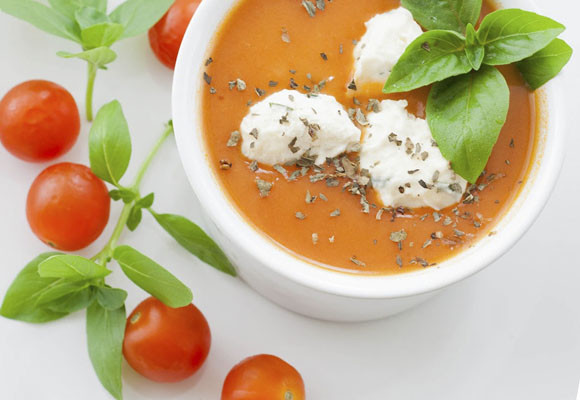

Goat cheese ice cream might just blow your mind. For all you cheese lovers, this is a must try! Although it is ice cream, I wouldn’t consider it as a dessert, it is something that can be served with appetizers and entrees such as soups, spread on bread or even serve alongside some fresh salad. The possibilities are endless! This ice cream is definitely not sweet like you might expect, but it does taste delicious. The flavor is sharp and you can definitely taste the goat’s cheese. I find it best served with warm dishes so you can get that ‘melt in the mouth’ feeling to make it even more mouthwatering!
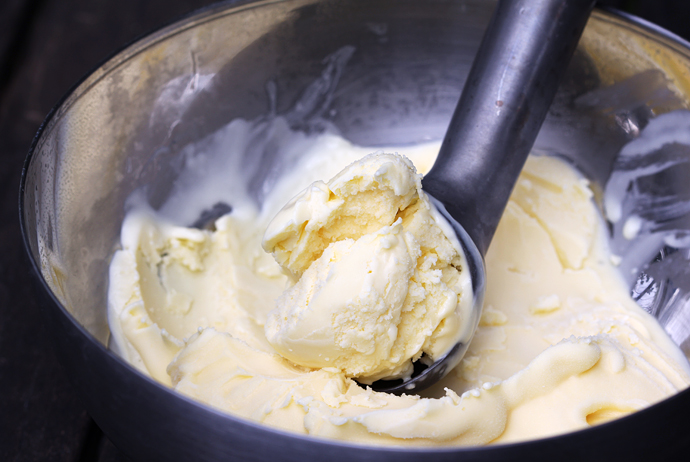

What You Need
4 oz Goat’s Cheese – Come pick up your delicious, top quality Goat’s Cheese at Shisler’s Cheese House!
3 tablespoon corn syrup
2 cups heavy cream
1/2 cup milk
4 egg yolks
1 cup sugar
What To Do
1. In a small mixing bowl, mix together the goat’s cheese and corn syrup until smooth.
2. In a small pan, bring the milk and cream to a boil over high heat. Then remove from heat. Whilst cream mixture is coming to a boil, whisk together the sugar and egg yolks in a mixing bowl.
3. Mix one fourth of the hot cream mixture to the eggs to temper them. Whisk in another quarter of the mixture, then add the egg mixture to the cream in the pan. Cook over low heat, consistently stirring until the mixture thickens enough to coat the back of the spoon. Do not overcook because eggs will scramble. Remove from heat and strain using fine-mesh strainer into a bowl set over a large bowl of ice water.
4. Add the goat’s cheese to the bowl and mix to combine.
5. Freeze the goat cheese base in an ice cream machine according to its instructions. It will keep for 1 week, frozen. Enjoy!
It’s Not Too Late To Get Your Easter Goodies From Shisler’s Cheese House!
Easter is a very important Christian festival in which we come together and celebrate the resurrection of Jesus Christ. While it has great religious significance, it can always be an exciting time of the year, celebrating by coloring and decorating Easter eggs, enjoying special Easter Baskets and eating our body weight in chocolate!
Here at Shisler’s Cheese house, we have the answers to all your Easter food needs! Be it a beautiful Easter basket unlike any other, or a tasty Chocolate Bunny, we have what you want!
Tired of the same old boring Easter gift baskets? Send unique Easter gift baskets from Shisler’s Cheese House this Easter Season and surprise those that are special to you. If you would like to use your own unique Easter Basket Ideas, we also have custom baskets available. Just give us a call or stop by at one of our Cheese Houses!

Standard Easter Baskets Include:
– Marble Cheese
– Dried Fruit Chips
– Yogurt Pretzels
– Heggy’s Chocolates
– Wild Maple Walnut Syrup
– Muddy Trail Mix
Custom Easter Baskets can include anything currently available on our website and in store!
Also available for Easter are a wide selection of chocolate including our extra special Solid Heggy’s Chocolate Bunnies!


They are available in either milk or white chocolate and are 20 Oz.
Get your Easter goodies now!
https://cheesehouse.com/
55 Kidron Road
Orrville, Ohio 44667
330-682-2105
Traditional Easter Food From All Over The World
It is Easter Weekend this week! What better way to get us ready than explore the world’s favorite, traditional Easter dishes? You never know, you just might find some tasty ideas for your own Easter meal!

Image Source: jovinacooksitalian.com/tag/easter/
‘Rosquillas’ From Spain
A lot of Spaniards will enjoy these special treats at Easter. These donuts can either be baked or fried. They are made from fermented flour and depending on the region, they’re either dusted with sugar, flavored with rosemary or some even soaked in anise liqueur.
‘Hot Cross Buns’ From U.K.
No Easter in Britain would be complete without Hot Cross Buns. This sweet, spiced bun is marked with a cross and has been eaten for hundreds of years in tradition to Easter. Simmel cakes which are fruit cakes topped with marzipan are also popular during Easter and they are made to resemble the Apostles.
‘Mämmi’ From Finland
Mämmi is traditionally made with rye flour, water, and powdered malted rye. It is also seasoned using dark molasses, dried powdered Seville orange zest, and salt. The name for it in Swedish is Memma.
‘Chervil Soup’ From Germany
Germans traditionally eat green colored foods on Maundy Thursday because it is known as Gründonnerstag or “Green Thursday”. Because of this, Chervil soup is a popular choice.
‘Tsoureki’ From Greece
This bread is quite like brioche. It is flavored with essence drawn from the seed of wild cherries. It’s an Easter tradition mainly because it is often decorated with hard-boiled eggs that have been dyed red, to symbolize the blood of Christ.
‘Kulich’ From Orthodox Christian Countries
Many families from Orthodox Christian Countries such as Georgia, Russia, and Bulgaria, are known to bake the Kulich cake during Easter time. Kulich is baked in a tall tin and is decorated with white icing and colorful sprinkles. The cake is also often blessed by a priest after and Easter service.
‘Påskeøl’ From Denmark
This may not be a dish as such but can easily accompany a great Easter dish because in Denmark, this is a special beer during Easter. It is slightly stronger than regular beer too!
‘Pashka’ From Russia
This dessert is in the shape of a pyramid, and for all us cheese lovers, it is made out of cheese! This particular dessert is traditionally served during Easter time in Russia. It is often decorated with the religious symbols ‘XB’, which are from “Christos Voskres”, which translates to “Christ has Risen”.
‘Pinca’ From Eastern Europe
Pinca is similar to a large hot cross bun. It is a sweet bread marked with the sign of the cross and is commonly eaten in Slovenia and Croatia to celebrate the end of Lent. In some areas of Italy, it is also enjoyed.
‘Paçoca De Amendoim’ From Brazil
This tasty Brazilian treat is often served in honor of the Easter festival in Brazil. It is made from peanuts, cassava flour, and sugar.
‘Capirotada’ From Mexico
Capirotada is a spiced Mexican bread pudding which is filled with cinnamon, raisins, cloves and cheese. It is popular during Easter and is said to that each ingredient carries a reminder of the suffering of Christ. The cloves resemble the nails on the cross, the cinnamon as the wooden cross itself and the bread as the Body of Christ.
‘Colomba Di Pasqua’ From Italy
Colomba Di Pasqua is very similar in taste to the Italian Christmas bread ‘Panettone’. This cake is candied peel stuffed and is often shaped like a dove for religious symbolism.
‘Mona De Pascua’ From Spain
This popular Easter cake is traditionally cooked in many regions of Spain during Holy Week (Semana Santa). This cake traditionally is what looks to be a large donut which is topped with a hardboiled egg.
The Wonderfully, Unique Cheeses Available At Shisler’s Cheese House!
Our fantastic Cheese House originally opened in 1958. Since then, we have come a long way and perfected our cheese to a high standard. The 2 main goals of our Cheese House have always been to provide wonderful local cheeses and gourmet foods to everyone, along with exceptional and friendly customer service.

We are currently owned and operated by the third generation of Shislers. We have 2 locations, the original being in Orrville, OH and the second being in Copley, OH. Because of our dedication of cheese and gourmet foods, we ship all throughout the United States and to over 30 different countries!
We have a wide selection of cheese, to your staple cheeses such as American Cheese and Swiss, to our more specialized, unique blends which we would love for you to try!
Here are some of our specialty cheeses:
Hot Pepper Cheese

Want to spice up your cheese plates? We have just the right cheese for the job! Our Hot Pepper Cheese has just the right amount of heat to make a perfect balance of flavor with a little extra kick! You have to try it to believe it!
Green Onion Cheese

We love to support local businesses and that doesn’t change when it comes to our cheese! Our Green Onion Cheese is made with all-natural 100% Ohio farm milk and real green onion. It contains no artificial growth hormones and is pasteurized processed cheese.
Bacon Cheese

Everyone loves bacon! Bacon and cheese make many appearances together in well-known dishes such as Chicken, Bacon Pasta Bakes, Salads, Casseroles and much more. It only made sense to make a Bacon Cheese! This cheese is mild orange cheddar which is infused with smoked bacon.
Beer Cheese

Beer Cheese is one of our Wisconsin Cheeses along with Brick, Muenster, Limburger and our American Cheeses. Our Beer Cheese is not to be mistaken for the popular Beer Cheese dips of Kentucky, it is a semi-soft combination of Limburger and Brick Cheese. The taste and smell are very strong and can be enjoyed with a nice cold glass of beer.
Chocolate Cheese

This cheese is one way to get the best of both worlds! Our Chocolate Cheese is made from a local recipe and all the ingredients are locally produced, combining fine chocolate fudge with premium cream cheese. This makes for a smooth, creamy balance of sweet chocolate and mild cheese!
These 5 kinds of cheeses are must try cheeses! Don’t hesitate, trust our family of cheese experts at Shisler’s Cheese House, and you won’t regret it!
Order your quality, affordable, delicious cheeses today at-https://cheesehouse.com/cheese.aspx
Should You Eat Moldy Cheese?
It’s always a shame when we discover our food has gone to waste because of mold. While mold is usually a sign that it’s time to discard something, it’s not as clear exactly what to do when it comes to cheese. Here is a guide which will help you differentiate which cheese is ‘good’ and which is ‘bad’ when mold takes place.


Image Source: static1.businessinsider.com/image/54cffb496bb3f7225d1b7747/we-definitively-solved-the-debate-over-whether-you-can-still-eat-cheese-with-mold-on-it.jpg
Now there are very clear types of cheeses that must be discarded when mold occurs- soft cheese like cream cheese, cottage cheese, and ricotta cheese. Also, cheese that is shredded, sliced or crumbled should be discarded when mold appears. With these kinds of cheeses, the mold can send threads all throughout the cheese. Harmful bacteria such as salmonella, e.coli, listeria, and brucella can also grow throughout the cheese. So stay clear of any consumption if these cheeses have mold.
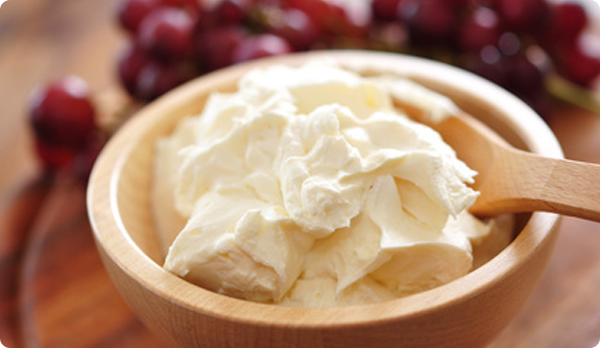

Image Source: newhealthadvisor.com/images/1HT00226/PART1.png
There is still hope for cheese with mold, though. Mold usually can’t penetrate far into hard and semisoft cheeses, like cheddar, parmesan, swiss and Colby. So it is easy to just cut the mold away from the cheese and eat the rest. It is safe practice to cut at least an inch around and below the mold to be safe, and do not contaminate the rest of the cheese by touching it with the knife.

Image Source: triggerwarning.co.uk/wp-content/uploads/2016/02/Cheese-board.jpg
It is true that not all molds pose a risk. Some types of mold are actually used to make cheeses, such as Camembert and Brie. These are safe molds to eat.
Whether or not you should eat the mold generally relies upon what type of cheese it is. It’s usually quite easy to differentiate between, but if you find yourself unsure, it is best to discard the cheese, just to be safe.
The Answer Is Feta
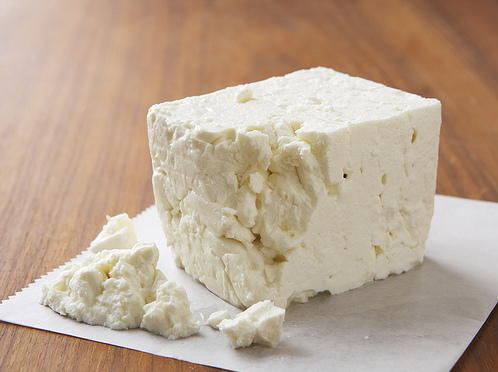

Image Source: irepo.primecp.com/2016/03/257238/recipe-1641_Large500_ID-1435983.jpg?v=1435983
Soaking chicken overnight in brine is an age-old technique. Brining a chicken seasons it through and through, locking in the moisture for tender meat.
However, unless you work in a Greek restaurant, going through 600 pounds of feta cheese a month, you probably won’t think to use feta as brine instead of plain salt water. At the Greek restaurant Souvla in San Francisco, that’s exactly what they did!

Image Source: 476343dd60686491a262-192409bd95508847c5120d21ffc8ab86.ssl.cf2.rackcdn.com/admin/uploads/transforms/20151023095545_576_13_704x388.jpg
The process of creating a feta brine involves the actual salt water liquid that preserves the cheese during storage. With going through so much feta cheese a month, the restaurant also went through a lot of the salt water solution that was used to store their feta. They were simply tired of seeing so much brine go to waste.
The brine is a lot more complex than salt water and has a fermented pickled flavor, along with an umami character which the restaurant knew could be repurposed. With that, Mr. Cervone came up with the brilliant idea to use the brine on the rotisserie chickens, which were served at the restaurant and sold as takeout. Not only did it make the chicken even more plump and juicy, it also added a pleasant earthiness to the meat. It also sparked immense popularity at the restaurant with how delicious the chicken is and now every night they go on sale, they are sold out very quickly!
Now although you may not have the commercially used feta brine, you can actually purée feta cheese in water and use that in its place. You marinate your chicken in the mix and store it overnight in the fridge. The following day, pat the chicken dry, cover it with lots of grated lemon zest, freshly ground black pepper, and dried oregano. You then roast it how you would any chicken and let your senses burst with this juicy, feta infused chicken!

Image Source: finecooking.com/CMS/uploadedImages/Images/Cooking/Articles/Issues_91-100/051100074-03-how-to-make-feta_ld.jpg
The Creamiest, Dreamiest Mac ‘N’ Cheese On Earth!
Mac ‘n’ cheese is an American staple! It is one of the most convenient, but tastiest foods you can make, pleasing all ages. Unfortunately, we are often disappointed with premade mac ‘n’ cheese, with it being too bland or worse- dry and gritty; when all we really want is fluffy pasta, smothered in a creamy, velvety cheese sauce, not forgetting the light, but perfect, crunchy topping. We want the type of mac ‘n’ cheese that is so good that we are scared to start eating it, in fear we might not stop!
Here are some top tips on creating the creamiest, dreamiest mac ‘n’ cheese you can find:


Image Source: brightcove.vo.llnwd.net/d21/unsecured/media/1033249144001/1033249144001_1836401082001_ari-origin05-arc-186-1347475591144.jpg?pubId=1033249144001
1. Classic Cheddar Is The Way To Go!
A lot of recipes or premade packages of mac ‘n’ cheese call for lots of different fancy cheeses and multiple kinds of cheese in general. It seems to take away the classic flavor of what mac ‘n’ cheese actually is- sometimes, simple is better! Classic mac ‘n’ cheese usually uses a simple, but tasty cheese like cheddar. Cheddar gives back the iconic taste of macaroni and cheese, along with a hint of parmesan. The parm combines with the cheddar, giving it a nutty flavor, but working well with the cheddar instead of distracting its flavor. It is also recommended you shred your own cheese as well, as there are usually added things that make ready-shredded cheese drier with less flavor.
2. Add Cream For A Super Rich Sauce
This is quite possibly one of the most important stages to ensure the creamiest mac ‘n’ cheese. It is common to add a basic white sauce such as béchamel. However, béchamel doesn’t really give the creaminess we are looking for- but milk and cream does! Trying a combination of milk and cream will change your life! It adds such an indulgent texture, making your mouth water with every bite. Whisking your cheese throughout the process is another recommendation, it will ensure the cheesiest sauce possible.
3. Add A Dash Of Mustard Powder
It may seem unusual to be adding mustard to mac ‘n’ cheese, but it really boosts the flavor, all while staying undetectable! You can use a number of spices when making this dish, but mustard powder gives that perfect, mouthwatering addition that is needed to bring out the cheddar in the best way possible.
4. Using Garlic Breadcrumbs For That Extra Burst Of Flavor!
Adding that extra layer to the top of our mac ‘n’ cheese gives us this extra amazing flavor with the light and crunchy texture needed. Many just use plain breadcrumbs, but using garlic breadcrumbs will infuse the flavor like no other.
5. A Simple, But Easily Missed Trick
This step is easily forgotten, but so important- seasoning your mac ‘n’ cheese. Seasoning in three steps will ensure the right amount of seasoning all throughout your dish and gives it just the right amount of kick. It is always best to add your seasoning (such as salt and pepper) while making the topping, the sauce, and the macaroni.
You may love to add extras such as bacon or lobster, but this creamy macaroni and cheese alone is more than enough! It simply melts in your mouth.
Bring Life To Any Party With A Cheese & Salami Plate!
Have you ever been invited to a party and upon arriving, you’ve noticed not only how mundane the crowd is but how “bleh” the food is? There is a solution for such a crisis! As the old adage goes, “Be the difference that makes the difference”. This could not be truer in such an instance. If you want to add life to a mundane party, be the life of the party and it all starts with great food! Here is an idea for making you a top-notch “life of the party” invitee!
 Image source: Rose2carmel
A big key to building a cheese and salami plate is letting your palate be your guide. Filling your platter with tastes you like, while paying extra attention to variety, is a good place to start. Here are a few tips on how to assemble your own cheese and salami plate:
Choose a variety of Cheeses
Having a broad spectrum of different cheeses will really help your plate. Ranging from a firm, aged, Spanish Manchego cheese to a soft and robust Taleggio cheese will make it all the more enjoyable. Added to the variety could be a Venissimo cheese which adds boldness to the mix, with the smoky and porky flavors! If you’re unsure of what variety you should choose, it’s always good to ask for recommendations at your local cheese shop too!
Choose a variety of Salami
You may want to only select a variety of different salami from the same brand, but you could mix it up a little by trying flavors from different brands which sound interesting to you. Some may be aged, spicy, or even herb crusted. There are so many possibilities out there! There will always be a variety which matches your palate.
Add sweet and spicy condiments into the mix
A big part of your plate will be the condiments alongside. Honey comb and Marcona almonds are great to accompany cheese and salami. Hot mustard, olives, and roasted red peppers also really bring out the flavor of the cheese and salami and the contrast so well together. Bread is the biggest, most popular condiment to go along with cheese and salami. A grilled baguette slice with olive oil brushed on can make for mouth-watering salami and cheese topped bites.
Serve at room temperature: A simple, but an important rule for a cheese and salami plate is that they must be served at room temperature, for the best taste. Serve when the cheese and salami have been out the refrigerator for around 20-30 minutes and enjoy!
A How-To On Pairing Cured Meats and Cheeses
Pairing Cured Meat And Cheeses
When pairing things, two approaches generally come into play. The first approach would be to pair like flavors, for instance, two sour ingredients. With this, the similar flavors may cancel each other out and let the other flavors flourish. The second, more common approach is that opposites attract, this takes play in every type of pairing there is, not just in food.
Sometimes, cheese alone on a cheese plate is not enough. You may want to consider other easy additions to compliment the cheese such as: honey, fruit, and crackers. However, if
you’re looking to really add something different and like no other, cured meat is the way to go! It might sound like a difficult pairing, but it really isn’t hard at all. The main tip is to make the most out of it, this can be done by knowing some of the general principles.
The best way to pair cured meat and cheese is through opposites. Unlike wine, beer, or spirits, meat is full of fat, protein, and salt, just like cheese. So you need to proceed with care when pairing the two as you can end up having an overwhelming flavor.
The two major groups that cured meat falls into are: encased or whole muscle. Encased meats have a noticeable tang to them, with intense aromas of black pepper, red pepper, fennel, truffle, and so on. Whole muscle meats are much sweeter, nuttier and more “meaty” like. It’s important to keep this difference in mind when thinking about a meat’s acidity and sweetness.
 Source: https://s-media-cache-ak0.pinimg.com/736x/00/2b/d6/002bd6c7db95fe3f385b674bbc1c5934.jpg
Pairing With Whole Muscle Meats
When pairing wine with cheese, if you’re in doubt, it’s best to pair wine and food made in the same region. This is the same for meat and cheese, it also brings us to the notion that it is good to start with a classic:
Parmigiano Reggiano and Prosciutto Di Parma literally begin their perfect pairing at the source. It is commonly known that the whey by-product of Parm is fed to the hogs, whose back legs actually become Prosciutto Di Parma! So one ingredient quite literally fuels the other, thus becoming the perfect pairing.
Prosciutto Di Parma, like all whole muscle cured meats, should be sliced into very thin sheets, neatly trimmed with a ribbon of fat. It melts away on the tongue into a delicious whiff of hazelnut and sweet butter. Parmigiano Reggiano on the other hand is quite the opposite of the elegant Prosciutto Di Parma. It is coarse and craggy, with a distinct tang in the mouth. It shares toasted and nutty flavors but has a leanness because of its partially skimmed milk.
Important lessons to learn from this pairing:
- Flavors which compliment, focus on what is shared, if you can rely on other elements for the contrast needed.
- The texture is important. A mushy, floppy or semisoft cheese paired with a thin slice of meats lacks the contrast needed for a good pairing.
- Acidity is important. In this pairing, it is the cheese, in other pairings it could be the meat. But one element must contribute the sensation of tart, citrusy, mouthwatering brightness to cut out the protein and fat of the other.
Another classic pairing which works on these principles:
A lightly smoked whole muscle meat called Speck is brilliantly matched with a cheese which is textually like Parm, but tastes completely different: Piave. Astringency in the meat is completely reliant on the wood that the meat is smoked over, while the cheese bursts with pineapple and tropical fruit. That is where it is opposite to our first classical pairing: the cheese handles the sweetness while the meat takes the savory lead.
Pairing With Encased Meats
The perfect instruments for spreading an even dipping in the right cheeses come from small-diameter sausage links, which are cured slowly over time and sliced into quarter-inch- thick coins. Most sausages give off amazing spices, garlic, smoke, or even heat, which adds a third component of flavor to play around with when pairing. A well-liked favorite:
Paprika- and cayenne- laden Spanish- Style Chorizo immersed into a perfectly ripened sheep’s milk La Serena will make your mouth water. La Serena, which is a bit airier than custard and full of tart, vegetal and what some would say sour flavors, is a thistle-coagulated cheese. This cheese succeeds in cooling the heat of the chorizo and you’re left with the sweet taste of paprika and garlic. Other cheeses which also work well are Fresh Ricotta or Goat’s Cheese. Cheeses that preserve lactic notes of fresh milk, but earthly notes of age also work well as cooling cheeses to spicy, smoky, or gamey meats.
Minding your meat’s acidity and added flavors is generally what to keep in mind when pairing cheeses with cured meats.
Cured Meats Which Are Cheese-Friendly
Not many of Europe’s cured meats make it into the U.S. but there are still a lot of domestic producers creating great cured meats with European traditions. Here are some brands to try:
– S. Wallace Edwards and Sons
– Olli Salumeria
– La Quercia
– Olympic Provisions
– Creminelli Fine Meats
Cheeses So Bizarre, They Will Leave You Scratching Your Head
 Image Source: http://images.counselheal.com/data/images/full/5025/cheese.jpg
1. The Cheese Made of Real Gold- A Stilton Cheese
In hopes that this cheese will be a perfect addition to your Christmas menu, cheese makers created a stilton cheese… made of real gold. Clawson Stilton Gold is 67 times more expensive than regular stilton, selling for £60.87 per 100g slice, or £608 per kilo- almost 1,000 U.S. Dollars!
This cheese took the title of the most expensive cheese the UK has ever made. It would cost £6 just for the cheese to top one cracker! Clawson claims that the premium white Stilton is so high in price because it is shot-through with a mixture of real edible gold leaf and real gold liqueur. They also claim that they’ve even been contacted by a famous popstar and a Gulf- based oil Sheikh who are desperate to sample a piece of the expensive cheese.
2. The World’s Most Expensive Cheese- Pule
Pule, being Serbian for foal, is made at the Zasavica Special Nature Reserve in Belgrade, Serbia. It costs $1700 a pound! The reason being for this is donkey’s milk. It takes around 25 liters alone, of donkey’s milk to make a mere one kilogram of the white, crumbly cheese.
According to the dairy’s manager, there is no other special ingredient which goes into making the cheese, its price is just based purely on the going rate for donkey’s milk (around 45 dollars per liter). However, Pule isn’t produced commercially anyway, so even if you’re a billionaire, you wouldn’t be able to just rush over to your local cheese shop to buy some.
3. The Cheese That Is So Stinky, That It Was Banned From Public Transportation- Epoisses
Epiosses, one of the smelliest cheeses you can find, was one of Napoleon’s favorites. Just to give you a taste of how repulsive the odor of this cheese is, it was banned from public transportation all over France. This cheese is made from cow’s milk and is washed in pomace brandy.
It is a very smelly, runny cheese but they say if it starts to smell too strongly of ammonia, it is no longer edible and should be thrown away. However, if it smells like someone who hasn’t showered in a week, enjoy!
4. The Cheese Made With Flying Maggots- Casu Marzu
Popular on the Italian island of Sardinia, Casu Marzu is a sheep cheese. The name literally means “rotten cheese”, which is ironic, because it is made with maggots and also why some have adapted the name to “maggot cheese”.
To create the maggot cheese, you begin with a slab of local sheep cheese, Pecorino Sardo, but you let it go beyond natural fermentation to a stage of infested decomposition. Larvae of the cheese fly (Piophila
Casei) are then added to the cheese, and the acid from their digestive system breaks the cheese’s fats down, making the overall product liquidy and soft. Casu Marzu usually contains thousands of larvae by the time it is ready for consumption.
Generally, the locals consider it unsafe to eat the cheese once the larvae have died, so it is served with the translucent white worms, that are one-third of an inch long, still squiggling. Many people brush the maggots off the cheese before eating it, while some others do not. The people who leave the maggots on the cheese may have to cover it with their hands as the maggots can jump up to six inches when disturbed.
5. The Cheese Made With Mite Excrement
Germany is definitely the world’s cheese powerhouse, producing over 1.8 million tons of 400 odd varieties of cheese annually. However, among all that cheese, one cheese, in particular stands out the most. Made in Würchwitz, this cheese is a highly sought after delicacy because of its unusual production process.
By allowing quark to sit in thousands on dust mites, Milbenkäse is the cheese that is made. Enzymes come from the mites’ excrement and they ripen the cheese. After one month, the cheese turns into a yellowish color, after three months, it turns into a reddish-brown, and after a year, the cheese turns into a blackish lump, which is most desirable to aficionados. People consume the mites along with the cheese. It is often described to taste bitter; people also believe it may have curative effects that keep people from being allergic to house dust.
6. The Cheese That Doesn’t Melt- Halloumi
Originating from Cyprus, Halloumi is a traditional cheese. It is suitable for grilling and frying because of its high melting point. You won’t find any BBQ in Cyprus without Halloumi, as it is a delicacy.
Another odd, but a common thing you see is Halloumi eaten together with watermelon in the warm seasons. The juice from the watermelon is refreshing while the Halloumi gives of a delicious taste.
It is one of the dishes that you’ll usually see served in a Cyprus Meze, and quite often, you’ll see the cheese alongside a cold beer in a taverna.
7. The World’s Strongest Cheese- Vieux Lille
The alternate names of this cheese are “Puant de Lille” and “Puant Macéré”, and they quite literally mean “stinking pickle”. This is just a mere description of how pungent the smell of this cheese is.
A British cheesemonger, The Teddington Cheese, which sells cheeses from around the world, only calls few kinds of cheese “pungent”. This is because, when they describe something as pungent, they really mean it, their icon behind the word being a man in a gas mask. If they were asked which is the strongest cheese in their shop, Vieux Lille would be a ‘strong’ contender for first place. This cheese is NOT for the faint-hearted. Along with its pungent odor, it has a strong and salty flavor.

