
Blog
Havarti: The Danish Cheese, not the Cheese Danish
When we think about Danish cheeses, we often think about Danish Blue, Esrom, Danbo… but, by far the most popular cheese that is exported from Denmark is Havarti.
Havarti is a semi-soft cheese, which has a creamy buttery flavor. It goes great on the cheese board with figs and sliced bread, or melted atop a sandwich. But, what else do we know about this cheese?
The Origins of Havarti
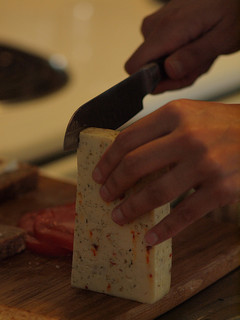
As noted above, Havarti is a Danish cheese; but the inspiration of this delicious treat comes from one woman’s travels around Europe during the mid 1800s. The commonly accepted story is that Hanne Nielsen was the wife of a New Zealand farmer that was extremely interested in learning about cheesemaking; and, in addition to traveling around Europe, learning different techniques, she set up a farm where she perfected her craft. The town where she set up her experimental farm, called Havarthigaard, is located north of Copenhagen; and, during the mid 1900s, became the source of Havarti’s name. (Source: Havarti Cheese Production and Uses)
What is Creamy Havarti?
Creamy Havarti (flødehavarti) is different from what would be considered the “original” Havarti, in that it is made with highly pasteurized milk, such that the whey proteins are not separated from the cheese curds; so, the end product is a lot richer and creamier.
The “original” Havarti is very similar to Swiss cheese in flavor and texture–but also, in that it is typically aged around 3 months. Creamy Havarti cannot be ripened for very long because the whey protein doesn’t age very well.
The Havarti Experience
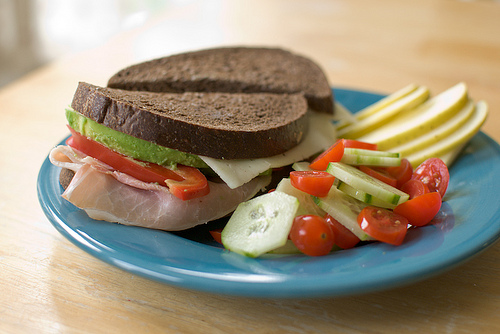
If you go to the supermarket, you will often find that there are many different kinds of Havarti. Much like chevre, this cheese is sold in varieties with fruits and/or herbs and spices, as well as original flavor. Some of the varieties you may find include cranberry, garlic, caraway, basil, coconut, and sour cream & chives; but, by far the most popular ones are dill, red pepper, and jalapeño.
Havarti is truly versatile. It is an excellent table cheese and is great on sandwiches and salads. It is a great melting cheese so, fondue and paninis should not be overlooked.
Looking for a great wine to pair with Havarti? It goes really well with just about any wine, but goes particularly well with sweet wines like Beaujolais and Riesling. If you’re going pick a red wine, try to keep with lighter-bodied wines.
Wrapping up
Havarti is certainly one of my favorite cheeses–and, I think it was one of the very first cheeses I tried when I started John Eats Cheese. If you’re looking to learn more about cheese or are looking for unintimidating cheese to start with on your journey of fromage exploration pick up some crackers and Creamy Havarti, and go to town.
Let us at Shisler’s Cheese House help you get your taste on with our supply of Havarti!
Chicken Alfredo Pasta Bake: For the Cheese and Pasta Lover
CHICKEN ALFREDO PASTA BAKE
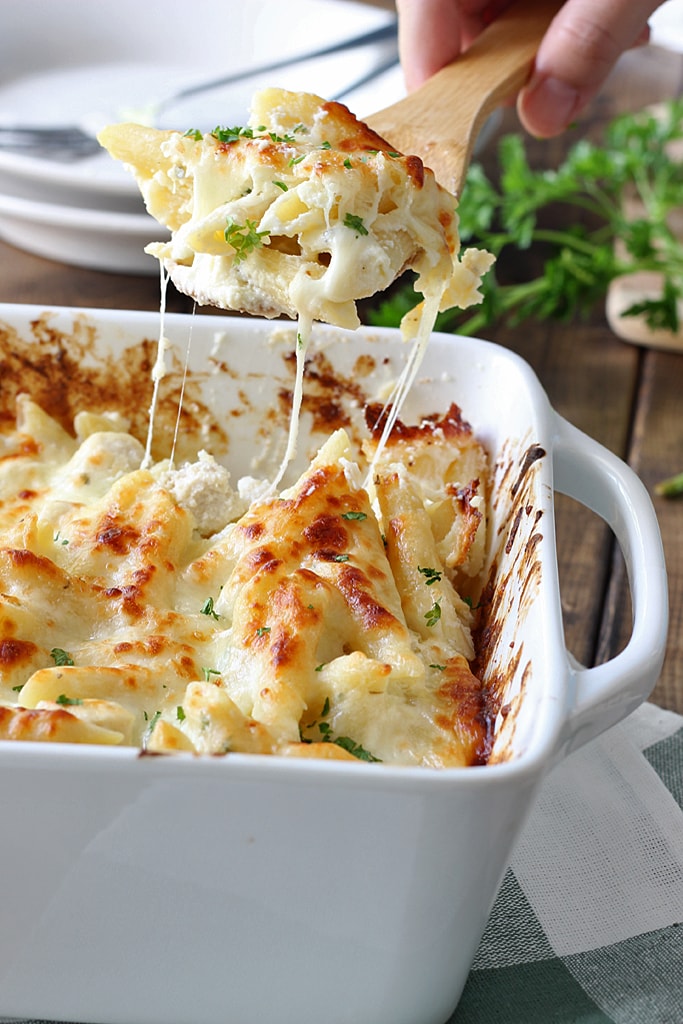
I don’t know about you, but I love a good Alfredo. It’s rich, it’s oh so yummy. And why shouldn’t we love it? It has all the goodness of butter, cream and Parmesan. Creamy. Cheesy. Yummy. So today we’re taking good old Alfredo sauce and making a chicken pasta bake. And we’ll add more cheese plus other stuff to make a great summer pasta casserole.
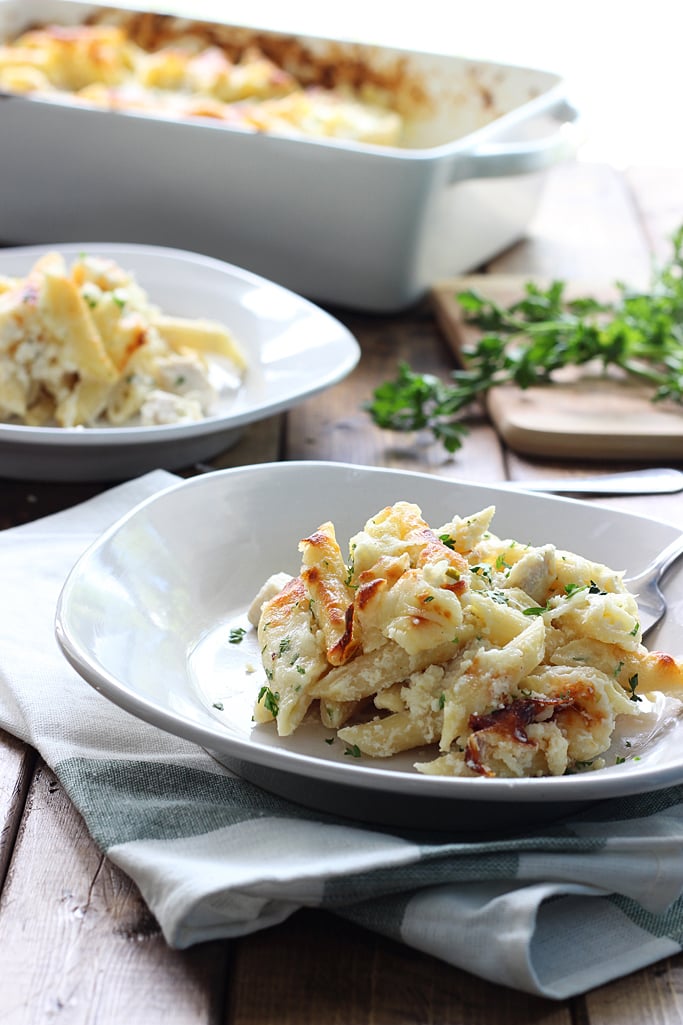
So if you’re wanting cheese, this is your dish! This makes a huge serving to go around and it heats up well. It’ll make that wet squishy sound when you mix it all up, a sign of tons of creamy cheesy power. It’ll give you long strands of cheese when you dish a serving. The kind that you’ll want to run your finger along to break. And it’ll more than satisfy your cheese craving.
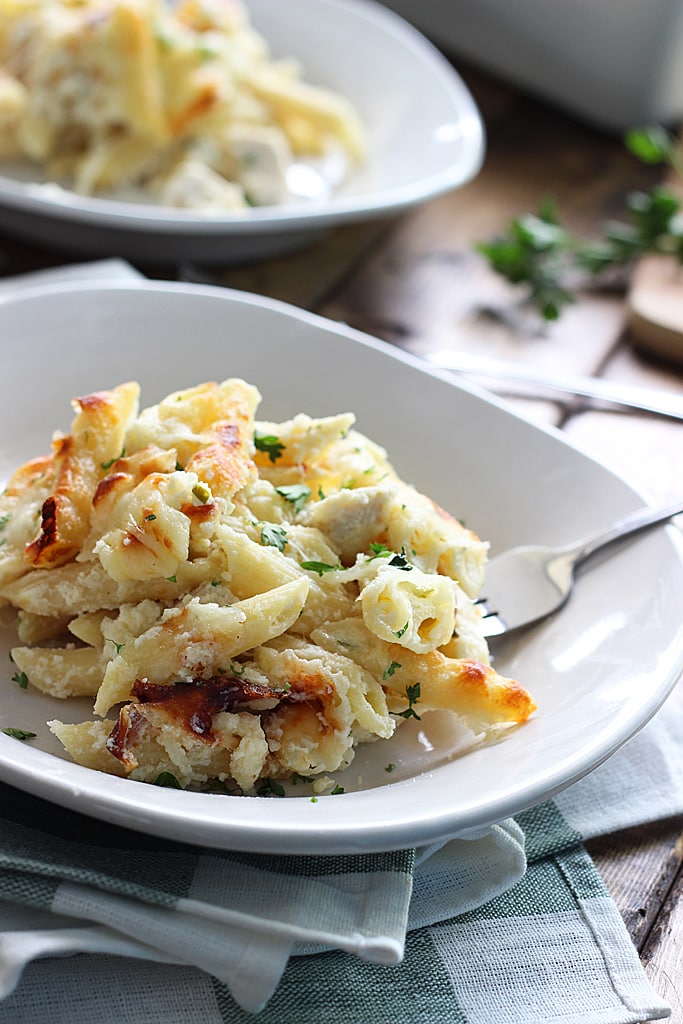
The great thing about this is how you can customize it to save you time. The best Alfredo sauce from scratch but you can use store-bought sauce. If you don’t like poached chicken, grill it. Or buy some rotisserie chicken and chop it up. And you can practically use any kind of pasta you want. Generally, penne is deal for bakes but there’s ziti and rigatoni.
Make sure to cook the pasta until the point just before it turns al dente. Then rinse it under cold water to stop the cooking process. Because if it continues cooking in the cheese sauce in the oven, it’ll get slightly mushy and mushy pasta is no fun…. to avoid this, finish off the al dente process in the oven. However, if you don’t mind or even like mushy pasta, then keep on cooking that pasta until it’s al dente, your choice…
There’s a lot of ricotta to go around, as you can see. So if you’re not big on it, you can halve the ricotta and egg portion before mixing it in with everything. Some people like it, some people don’t, again, your choice…
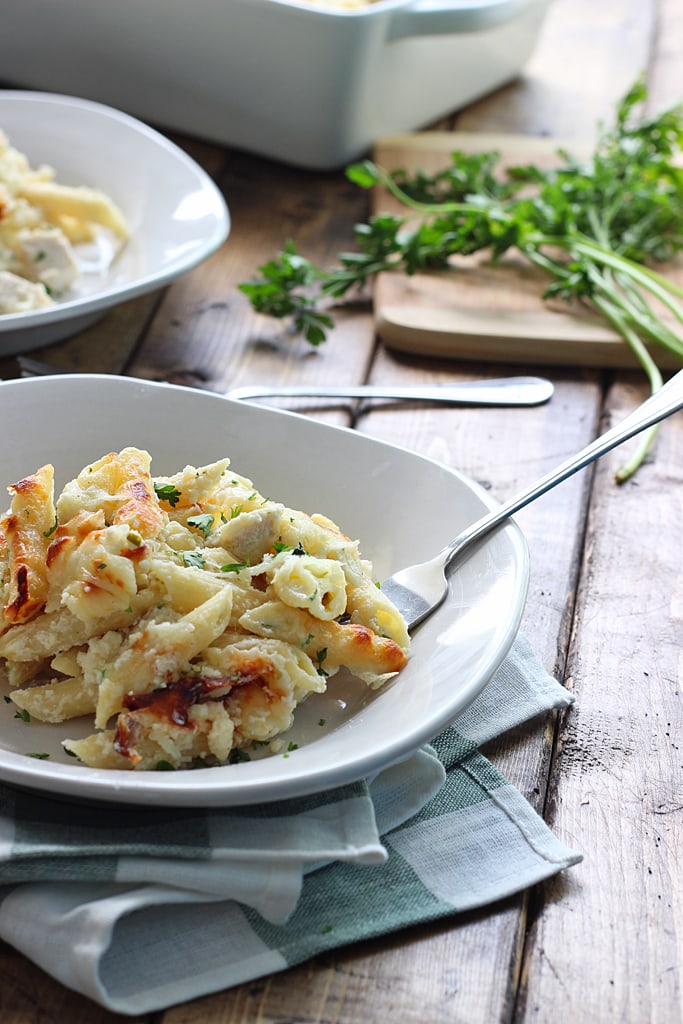
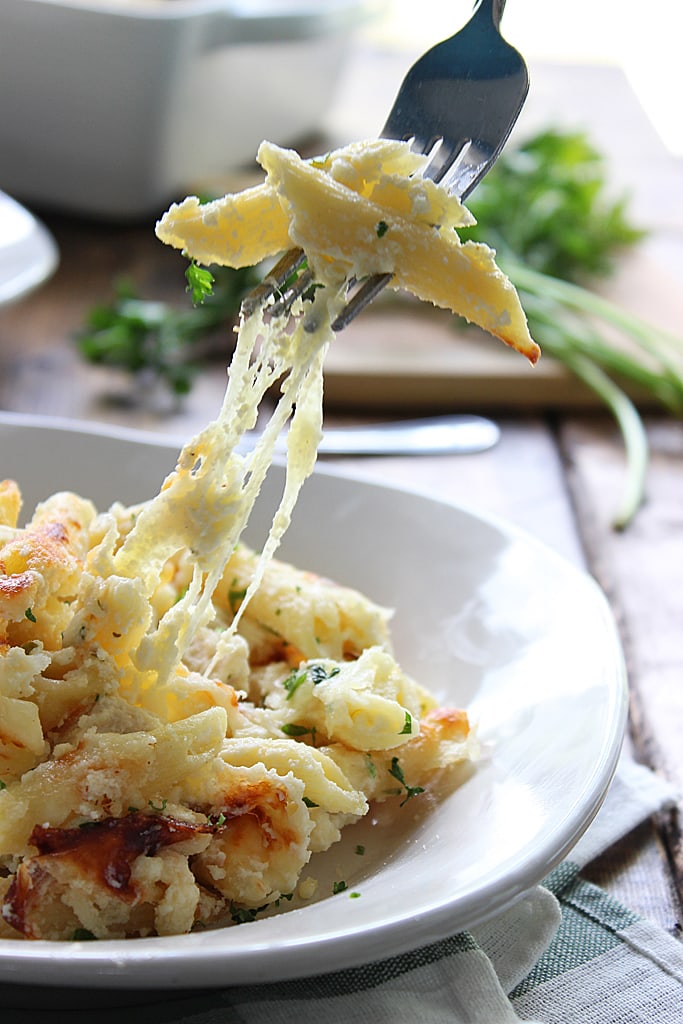
So really, if you’re looking for a fairly quick, but delicious meal idea for lunch or dinner, this one’s for you, as the amount of time it takes from start to eat is just under and hour…. not bad at all… Or if you’re a family of four and you want something for two days, here you go. And if you have a huge family, have at it. This can serve up to ten servings. The cheese is not stingy!
- 16 oz. penne/ziti/rigatoni pasta
- 2 cups Alfredo sauce
- 8 oz. sour cream
- 3 cups poached/grilled/rotisserie chicken, cubed
- 15 oz. ricotta cheese
- 1 teaspoon garlic, minced
- 2 eggs, beaten
- ¼ cup Parmesan cheese, shredded
- 1 tablespoon parsley, chopped
- Salt and pepper to taste
- 2 cups mozzarella cheese, shredded
- Cook the pasta till just before al dente
- Drain and rinse pasta under cold water to stop the cooking process
- If you’re making Alfredo sauce from scratch, see notes
- Mix pasta with the Alfredo sauce, sour cream and chicken
- Combine ricotta, garlic, eggs, Parmesan and parsley and mix throughly
- Season the pasta mix with salt and pepper to taste
- Add the ricotta mixture to the pasta and stir to combine
- Top with a thick layer of mozzarella cheese
- Bake in a 9×13 casserole dish at 350 degrees F for 30 minutes or until bubbly
- Broil at 450 degrees F for 2-3 minutes or until the cheese starts to brown
- Serve hot
What’s Better Than A Cavs’ Championship? Smoked Gouda Mashed Potatoes
Gouda, or “How-da” as the locals say, is a Dutch cheese named after the city of Gouda in the Netherlands. If truth be told, it is one of the most popular cheeses in the world, accounting for 50 to 60 percent of the world’s cheese consumption. It is a semi-hard cheese celebrated for its rich, unique flavour and smooth texture. The original cheese markets in Gouda is one of the last standing commercial cheese markets in the Netherlands. Since the name is not protected, it has become a generic classification for all cheeses produced and sold under the name Gouda.
Gouda is typically made from pasteurised cow’s milk although some artisan varieties use sheep’s or goat’s milk to produce cheeses that are going to be aged for a long time. Boerenkaas is a typical variety of unpasteurised Gouda cheese produced by the farmers from milk of cow’s grazing on the natural, low pastures of Netherlands. There are seven different types of Gouda cheese, categorized depending on age. Graskaas is young Gouda ready to be consumed within weeks of production. On the other hand, is the extra aged, Overjarig cheese which has a full-flavoured, hard, golden interior and salty flavour reminiscent of a toffee. Between the spectrums is a variety of Dutch Gouda’s classified as per the texture and age – Jong, Jong belegen, Belegen, Extra belegen, and Oud. Each cheese gets increasingly firmer in texture and richer in flavour than earlier classification. The waxed rind of the cheese also changes by the age as soft, younger Dutch Gouda cheese are identified by yellow, orange, or red wax rinds white mature cheese have black wax coverings.

In America, smoother and less flavorful commercial Gouda is popular than Dutch Gouda. Artisans in Netherlands may produce Dutch Gouda using raw milk as well as pasteurized. To enhance the flavor of the cheese, herbs, seasonings, and nuts may be blended. In Netherlands, aged Gouda is commonly used to richen soups, sauces.
Young Goudas are best paired with beer while medium cheeses taste best when paired with a fruity Riesling or Chenin Blanc. A well aged Gouda complements wines that are deeply flavored such as a rich Merlot or Shiraz. Gouda cheese may be grated, sliced, cubed or melted. It may be used as a table cheese or dessert cheese.
SMOKED GOUDA MASHED POTATOES

Fancying up mashed potatoes can take a plain Jane dish and make it a stand out yummy. Sorry if your name is Jane. What better to make something stand out than smoked gouda? Oh baby. It’s yummy. Add 1 cup for a hint of smokey goodness, and 2 cups for a heavier handed approach. Or maybe your tastes will fall somewhere in between. This is a fabulous twist on your standard taters. Live a little, right?
Time to Make It: about 30 minutes
Yield: Serves 6 to 8
Ingredients
6 large russet potatoes
6 cups chicken broth
1/2 cup butter
4 oz cream cheese
1 tsp salt
1/2 tsp white pepper
1 to 2 cups shredded smoked Gouda Cheese
Instructions
1. Bring the chicken broth to a boil in a large stockpot. (If you need more liquid to cover your potatoes, you can add in water.)
2. Meanwhile, peel and rinse the potatoes. Cut them into bite-size pieces. Pace them in the chicken broth. Return to a boil, reduce heat to medium low, and simmer until potatoes are soft, about 10 to 15 minutes depending on the size of pieces.
3. Drain the liquid from the potatoes. Add in butter, cream cheese, salt, and pepper. Use a hand mixer to whip until smooth, or mash together with a potato masher until cheese and butter are melted.
4. Mix in the Smoked Gouda until cheese is melted. Serve hot.
Be sure you stop by Shisler’s Cheese House and to grab your supply of Smoked Gouda!
Insalata Caprese: Simple, Elegant, Refreshing, Delicious
INSALATA CAPRESE: THE ENDURING STYLE OF ITALIAN CUISINE

No one can quite say when or where the most famously simple of all salads — the insalata caprese — first appeared on the scene, or the exact origin of when it was named after that beautiful sun-soaked isle of Capri, part of very historic Campania region. But one thing we do know is that it is absolutely one of the most enduring of all Italian antipasti and so evocative of those heady days of fun, vino and romance along the Mediterranean coast. (Speaking of fabulous Italian things, be sure to check out the recent post Studio of Style did on Campari.) Of course, the famed tricolor look of the dish which, like the equally famed Margherita pizza of Napoli, depict the colors of the Italian flag. But let’s dig a little bit deeper into history, okay? (We know how you regular readers of Studio of Style just love a little bit more of everything, right?) First of all, so much of the world associates Italian cuisine with that wonderful deep red tomato sauce found on many dishes — but wait! The word “pomodoro” from the words “pomo d’oro” or “golden apple” doesn’t quite match up with the color red, now does it? That’s because the first tomatoes brought to Europe from the New World (i.e. The Americas) were actually more likely to have been yellow than red! More on that in a moment. But some say that “pomo d’oro” might also be a mistranslation of the phrase “pomo di moro” or “fruit of the Moors” who had introduced so many exotic foods to Italy. You see, it was Italian physician and botanist Pietro Andrea Mattioli who wrote in 1544 that a new type of eggplant had been brought to Italy which was blood red or golden in color that could be eaten like an eggplant — and 10 years later Mattioli used the words “pomo d’oro” in print. The yellow variety of the tomato definitely made landfall in Europe sometime after 1521 when Spanish conquistador Hernán Cortés captured the Aztec capital of Tenochtítlan in Mexico — though Christopher Columbus of Genoa (who was also working on behalf of the Spanish monarchy) might very well have brought some back around 1493! And did you know that the earliest known Italian cookbook with tomato recipes was published in Naples (naturally!) around 1692 — most likely the recipes were translated from Spanish sources. Thus, by a slight twist of history the famed marinara sauces became red and not yellow (but the name “golden apple” still stuck!). But the bigger question is: who put together that amazing combination of basil, mozzarella di bufala, tomatoes and olive oil — crowned with a light sprinkling of salt and black pepper — a combo that epicureans have been raving about ever since? To enjoy this antipasto to the fullest, try to find the freshest handmade mozzarella, the ripest seasonal tomatoes, absolutely fresh basil, the best extra virgin olive oil and high quality salt and freshly ground black pepper (and please, novinegar of any kind!!). Said perhaps one of the most famous Italians of all history, Leonardo da Vinci: “Simplicity is the ultimate sophistication.” And how right he was…and still is! The simple yet profound pleasures found in insalata caprese transcend time itself! And in the words of so many Italians throughout the ages: Mangia bene, vivi felice!
Once again, you can see the colors of the italian flag in this dish. Insalata Caprese is one of my all time favorite salads. I like to serve it over a bed of fresh spinach. Refreshing and light!
The word mozzarella comes from the italian verb “mozzare” which means to cut. Mozzarella di bufala is made from the milk of the domestic water buffalo, a bovine which has it origins in Asia but is now found in southern Europe, South America, Northern Africa and India among others. Mozzarella di bufala is a bit saltier and softer than regular cow’s milk mozzarella. The best quality is considered by many Mozzarella di Bufala di Campania made in the geographical areas of Lazio (near Rome) and Campania (Naples, Salerno, Paestum, Pompeii, including Capri) Regions which became protected by the European Union under Denominazione di Origine Controllata (DOC like in wines) in the 1990’s. It literally melts in your mouth! In short, mozzarella is made by heating the milk (to separate the whey form the curds), resting, spinning and pulling the cheese curds to shape into balls. The cheese maker will knead the curds like bread by hand, pull-out and cut the mozzarella balls once the cheese curds have reached the desired consistency. This is a semisoft cheese and has a high moisture content. That is why it is sold in specialty food shops in brine and vacuum sealed. On the other hand, good quality mozzarella di bufala is made in many other countries in Europe and the Americas.
Insalata Caprese (salad made in the style of Capri) can also be called Tricolore Salad which also includes avocado. If you want to splurge (it is more expensive than regular mozzarella) and the best flavor and quality, use mozzarella di bufala when you make homemade pizza. Use it as a topping or make Insalata Caprese Pizza. It is amazing!
Buon Appetito!
Instructions on making Insalata Caprese…
Ingredients
2 7 ounce mozzarella di bufala balls
2-3 Roma tomatoes
2 tbsp fresh basil coarsely chopped
1/2 tsp kosher salt
1/4 cup extra virgin olive oil
Pepper to taste
Drizzle of good quality aged balsamic vinegar (optional)
Procedure

1. Slice mozzarella and tomatoes. In a plate, alternate placing one slice of tomato over each slice of mozzarella.

2. In a small bowl, place the chopped basil with olive oil, salt and pepper and stir with a spoon.
3. Spoon mixture over mozzarella and tomatoes. Drizzle with balsamic vinegar and serve.
4. Enjoy this delicious and healthy dish!
Make sure to stop by Shisler’s Cheese House and let us help you create this simply, beautiful and delicious work of culinary art with our supply of fresh Mozzarella Cheese!
The Limburger Legacy: A Cheese That Has No Equal
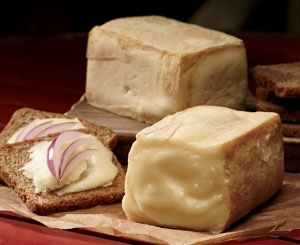
“Limburger—Don’t Eat It with Your Nose.” So reads the sign above the bar at Baumgartner’s Cheese Store and Tavern in Monroe, Wisconsin: the only city in America where Limburger cheese is still made.
Limburger has been the butt of jokes for nearly a century, though to be honest, it smells more like feet. Past celebrities from Mark Twain to Charlie Chaplin have used it as comedic fodder, and on a visit to Baumgartner’s, comedian Larry the Cable Guy spat out his sample, declaring that it tasted like a dead possum. But Andrew Zimmern, host of Travel Channel’s “Bizarre Foods,” loves the stuff.
Truth be told, there are far more challenging food products on the planet…like Iceland’s hákarl or China’s “century egg.” Even in the cheese world, Limburger pales in comparison to pillars of pungency like Époisses or Stinking Bishop…but the more famous Limburger’s reputation lives on.
History of Limburger: Who Came Up With This Stuff?
As European food products go, Limburger hasn’t been around all that long. It was first made in the 19th century by Trappist monks near Liège in the Duchy of Limburg (a territory now divided between Belgium, the Netherlands and Germany). Before you joke about the stinky cheese helping the monks maintain their cloistered lifestyle, bear in mind that the Trappists are also known for making some of the very finest beers in the world. Today, most of the Limburger in Europe is made in Germany.
Limburger was first made in the U.S. in 1867 by Swiss immigrants in Green County, Wisconsin. In this epicenter of Swiss cheesemaking, Limburger even outpaced Swiss in annual production by the 1920s in order to supply the German-speaking populations of places like New York and Cincinnati, where a Limburger sandwich was a favorite workingman’s lunch: cheap and typically washed down with a glass of beer. Apparently it was nearly unthinkable to eat Limburger without the accompanying brew, because Prohibition so hurt American sales of Limburger that production either ceased or sharply curtailed in most American cheese factories.

Farm to Table in Monroe
Today the only American producer of Limburger is Chalet Cheese Cooperative of Monroe, Wisconsin: the seat of Green County. Of the 56 Master Cheesemakers in Wisconsin, only Chalet’s Myron Olson is certified to make Limburger.
Founded in 1885 by five dairy farmers, Chalet Cheese Cooperative today is owned and operated by 21 member farms. Olson, who started working there at age 17, has managed the plant for more than 20 years. Because he uses only milk from the Cooperative’s member farms (comprising 70% Holstein and 30% Brown Swiss cows), he knows exactly where the milk is coming from and the qualities it will contribute to the final product. He also believes the limestone-filtered water of south-central Wisconsin helps make the best-quality cheese to be found anywhere in the world.
Olson doesn’t just make Limburger, either; certified in other styles, he has won numerous state and national awards for Swiss, Baby Swiss and smoked versions of both. He also makes the very mellow Brick cheese as well as an award-winning German-Style Brick: a close cousin to Limburger, with the same bacterial smear used for ripening it.
Wait…did you say bacteria?
A Smeared Reputation
Limburger is one of a number of smear-ripened, washed-rind cheeses. Washed-rind cheeses are cured in a saltwater brine which may or may not include things like beer, wine, and spirits. Periodically washing the cheese with this solution keeps the surface moist and hospitable to bacteria like Brevibacterium linens, which happens to be the very same bacterium responsible for human body odor—specifically foot odor. So if someone tells you Limburger smells like sweaty gym socks, they are technically correct.
Of course, the food world is full of examples of beneficial bacteria. Microorganisms like Lactobacillus bulgaricus and Streptococcus thermophilus give yogurt its distinctive tang and break down lactose to make it easier to digest. In the case of Limburger, a healthy smear of B. linens helps the maturing process and prevents the growth of undesirable molds. Other smear-ripened cheeses include the French Port Salut and Munster (not the mild, red-rind Muenster we’re familiar with, but a much funkier variety). The bacterial culture used at Chalet was first cultivated in 1911.
Limburger as we know it was nearly eradicated in the U.S., ironically by the company that built the Chalet plant and was founded by the man who “cleaned up” cheese in America.
J.L. Kraft invented processed cheese through a patented pasteurization process, which allowed his cheese to be shipped long distances. Kraft’s Mohawk Valley Limburger Spread was a nationwide hit, and in 1947 his company built what they considered the most cutting-edge Limburger plant in the world (which Chalet now uses). In the name of progress and sanitation the Kraft folks replaced the plant’s old pine curing boards with new ones. The cheese failed. Luckily, they had saved the old boards—which have been in use ever since—and the century-old colony of B. linens continues to work its bacterial magic.
The Three Stages of Limburger
“That old bac magic” takes awhile, and despite the overwhelming aroma encountered at Chalet during the cheesemaking process, fresh Limburger is not all that intimidating. In fact, it’s even downright mild in its infancy, and only develops its nasty temperament over time…with a little help from temperature. Limburger is dated to expire in six months; using the “Best if used by” date on the package as your guide, you can age your own Limburger in the fridge at home to suit your personal taste. We can break down the metamorphosis of Limburger into three stages:
Stage 1 (Beginner): If you like things on the mild side, eat it fresh out of the fridge, and as soon as possible after you buy it. When the cheese is only a few weeks old, it’s mild and crumbly—a bit like feta—with a bit of a yeasty smell. Like all washed-rind cheeses, Limburger ripens from the outside in…and since the rind contains most of the funk, cut it off before serving.
Stage 2 (Intermediate): Two to three months before expiration, Limburger is rich and creamy, and just starting to stink…like Brie with an attitude. Let it come to room temperature before serving for maximum flavor. The rind is edible, but does add strength. You can wash it and dry it if you wish to remove some of the odor.
Stage 3 (Hardcore): At four or more months, you’ve got weapons-grade Limburger—soft, almost runny, and in full-on sweaty sock mode. Remember that six-month expiration date? Diehards see that as a starting point, and even take it out of the fridge periodically to speed up the process. Just remember: it smells far worse than it tastes. Even at this stage, the flavor is not as sharp as aged Cheddar or as pungent as blue cheese. It’s very robust and rich. As they say at Baumgartner’s, “don’t eat it with your nose”; just pop it in your mouth and enjoy.
Limburger Recipes and Serving Tips
Because its unique aroma tends to overpower most foods, Limburger is not really considered a “recipe” cheese…although the Wisconsin Milk Marketing Board and a cult of fans will beg to differ.
The classic way to serve Limburger is on rye bread with sliced red onion and brown horseradish mustard or sweet-hot mustard. A lot of folks love it with strawberry jam, either as the sole condiment (especially at Stage 2) or in addition to mustard.
Baumgartner’s serves the full-strength Limburger on their famous sandwich (as above, no jam), or for true believers they’ll add a couple of thick slabs of locally made braunschweiger (liver sausage). And they always serve it with a breath mint, though that’s somewhat like the proverbial Band-Aid on a bullet wound.
Limburger Pairings
Unless you have pretty adventurous friends, you’re probably not serving Limburger at a wine tasting party. That doesn’t mean it can’t be done, but Limburger is a workingman’s cheese; it goes best with beer, preferably bock (a hearty, often dark, variety). At Baumgartner’s, locals get the full Monroe terroir by enjoying Limburger with Huber Bock from the Minhas Brewery right down the street. A porter or stout would certainly do the trick, too—think dark and flavorful.
The bottom line is: if you’re a real cheese lover or someone who craves a little adventure, you owe it to yourself to put Limburger on your food bucket list. Stop by Shisler’s Cheese House and make this bucket list item a reality and pick up your own share of Limburger Cheese!
Gruyere Cheese: A History As Rich and Fascinating As Its Flavor
HISTORY OF GRUYERE CHEESE

Gruyere cheese has a history as rich and nutty as its flavor. This is a cheese so good and so fascinating that countries went to war over it! Yes, you read that right… war.
Gruyere’s identity crisis
Is Gruyere a Swiss cheese? Is it French? Is it Austrian? It is hard to know. Medieval peasants developed this variety of cow’s milk cheese as a means of survival. It was developed in the mountainous town of Gruyeres, Switzerland (making it Swiss Cheese by its geographic origins). However, since the town is so close to the Franco-Swiss border, there are many similar varieties of cheese, including Comte and Beaufort, that are made in France that still fall under the umbrella term of Gruyere. To complicate matters even further, there is yet another variety of Gruyere cheese that originates on the Austrian side of the Alps. The Austrian variety is similar to the Swiss variety in taste, color, and texture. Regardless of the country of origin, there is no doubting that this creamy, sweet, and nutty cheese is nothing short of spectacularly delicious. Cheese this good is worthy of a distinction all its own; perhaps it is best to simply refer to Gruyere as an Alpine cheese.
The Gruyere War
Few things bring about international disharmony more than cheese. This was one time when the Swiss absolutely did not remain neutral. Cheese makers in France and Switzerland went to battle for three years over which country made the best Gruyere cheese. Both countries claimed to have exclusive rights to the “Controlled Designation of Origin” for Gruyere. Since both varieties of cheese have distinctly different taste and appearance, this caused a problem. The French believed they deserved the distinction since their cheese was more widely recognized. The Swiss argued that the cheese is named after a region on their side of the border, and they had been making the cheese longer. The debate was so heated the European Union (EU) had to step in to mediate. The EU decided in favor of the Swiss since the origination of the cheese came from Switzerland.
The Gruyere timeline
Gruyere cheese has a long and storied history dating back many centuries. Here are but a few of the highlights of this storied cheese.
The 12th Century
The region of Gruyere has been producing their namesake cheese since the early twelfth century. The inhabitants of the area during that time found a way to produce the cheese from the excess milk that was produced by their cows. They were eventually able to sell their cheese to people in France and Italy.
The 17th Century
The seventeenth century brought with it official recognition of the regional name of the cheese. It was around this time that the exportation of the cheese began to take off. Since its popularity was beginning to grow, the concern for the protection of its origin also began to take root. But, not until the 1762 was the word that specified its origin entered into the dictionary of the Académie Francaise.
The 18th and 19th Centuries
During the late eighteenth and early nineteenth centuries, many people from the town of Fribourg, Switzerland immigrated to the Gruyere region. This movement extended the geographic production zone of Gruyere cheese to the neighboring villages of Vaud, Neuchatel, Jura, and some areas of France. However, there was no trade protection in place, and the cheese was often imitated. By the mid-nineteenth century, a campaign toward structuring trade and a fight for recognizing designation of origin was begun.
The 20th and 21st Centuries
Discussions regarding Gruyere cheese took place in Madrid in 1891, Paris in 1926, and Rome in 1930. The result of these meetings was an agreement to protect the denominations of goods and their origins. However, it was not until 2001 that Gruyere cheese was awarded “Controlled Designation of Origin” protection, which regulates the methods of locations of the production of the product in Switzerland. In 2011, it received the same designation for the entire continent of Europe.
Interesting miscellaneous facts about Gruyere cheese
A food with such a long and storied history must have some interesting facts about it, and Gruyere does not disappoint in that area. Here are a few interesting Gruyere tidbits to chew on:
The hole controversy
There is some international controversy regarding the presence of holes in Gruyere cheese. According to French agricultural law, French-style Gruyere cheese must have holes in it. However, in the Swiss varieties of Gruyere, no holes are present.
A cheesy faux pas
An old legend states that way back in AD 161 Emperor Antonin the Pious actually died of indigestion after eating too much Gruyere cheese. At least he went happy and satisfied!
Thankfully, today Gruyere does not carry with it so much controversy. All you have to do is enjoy it and Shisler’s Cheese House can bring the Gruyere experience to your taste buds with our own supply of the famed Gruyere Cheese. Stop in and pick some up today or order online here!
Marinate Cheese? Did Heaven’s Gates Open?
Summertime is all about easy entertaining and easier food: bountiful produce allows us to spend less time fussing in the kitchen and more time al fresco with friends. I’m all about quick recipes that produce big flavor, and these marinated mozzarella balls do just that. The best part? They get better the longer they sit, so make a triple batch and you’ll always be ready for unannounced guests that come your way.

Italians perfected the art of eating centuries ago, and one of many things they’ve mastered is the way to start a party. Antipasti — which means “before the meal” — are small bites meant to whet the appetite and prepare you for the upcoming feast. An antipasti platter can be composed of almost anything, but cured meats, cheeses, vegetables, and preserved pantry goods are the traditional place to start.
Antipasti, or any summer appetizer for that matter, can and should be as low maintenance as you desire. These “little mouthfuls” of mozzarella are marinated in a zesty bath of garlic, herbs, and olive oil. They are impressive enough to serve alone, but are right at home in a more expansive spread. Even better, they require minimal prep and can be adapted to whatever ingredients you already have on hand.
Don’t just keep this versatile recipe locked up at home. Transfer the tasty bites into cute jars to offer as hostess gifts, or pack them along on your next beach picnic. They’ll taste good anywhere you choose to eat them — even better with a bottle of chilled Rosé!

Garlic and Herb Marinated Mozzarella
1 pound (16 ounces) bocconcini or ciliegine, drained (See Recipe Notes)
Recipe Note
Bocconcini (and ciliegine) are 1- to 2-inch balls of fresh mozzarella packed in water. They can be found in gourmet cheese section of well-stocked grocery stores. Feel free to substitute feta or goat cheese if desired
Be sure to stop by Shisler’s Cheese House for your fresh supply of Mozzarella and get the marinating party started! Or order online here!
The “Untold” History of Cheese
This is the story you’ll often hear about the discovery of cheese in human history…

About 9,000 years ago, a nomad was travelling and brought along with him some milk in an animal stomach, serving as a sort of thermal insulator, to have something to drink at the end of the day. But when he arrived, he discovered that the rennet in the stomach lining had curdled the milk, creating the first cheese.
But there’s a major problem with that story, as University of Vermont cheese scientist and historian Paul Kindstedt explained on the latest episode of Gastropod—a podcast that explores food through the lens of science and history. The nomads living in the Fertile Crescent of the Middle East in 7000 B.C. would have been lactose-intolerant. A nomad on the road wouldn’t have wanted to drink milk; it would have left him in severe gastro-intestinal distress.
Kindstedt, author of the book Cheese and Culture, explained that about a thousand years before traces of cheese-making show up in the archaeological record, humans began growing crops. Those early fields of wheat and other grains attracted local wild sheep and goats, which provide milk for their young. Human babies are also perfectly adapted for milk. Early humans quickly made the connection and began dairying—but for the first thousand years, toddlers and babies were the only ones consuming the milk. Human adults were uniformly lactose-intolerant, says Kindstedt. What’s more, he told us that “we know from some exciting archaeo-genetic and genomic modeling that the capacity to tolerate lactose into adulthood didn’t develop until about 5500 B.C.”—which is at least a thousand years after the development of cheese.
It took another recent advance to figure out the origins of cheese: Kindstedt says that only recently have scientists been able to analyze the chemical traces on pottery from thousands of years ago in order to find milk fat in the higher concentrations that indicate it was used to hold cheese or butter, rather than plain milk.
________________________________
Using this new research, Kinstead explains, we now know that the real dawn of cheese came about 8,500 years ago, with two simultaneous developments in human history. First, by then, over-intensive agricultural practices had depleted the soil, leading to the first human-created environmental disaster. As a result, Neolithic humans began herding goats and sheep more intensely, as those animals could survive on marginal lands unfit for crops. And secondly, humans invented pottery: the original practical milk-collection containers.
In the warm environment of the Fertile Crescent region, Kinstedt explained, any milk not used immediately and instead left to stand in those newly invented containers “would have very quickly, in a matter of hours, coagulated [due to the heat and the natural lactic acid bacteria in the milk]. And at some point, probably some adventurous adult tried some of the solid material and found that they could tolerate it a lot more of it than they could milk.” That’s because about 80 percent of the lactose drains off with the whey, leaving a digestible and, likely, rather delicious fresh cheese.
With the discovery of cheese, suddenly those early humans could add dairy to their diets. Cheese made an entirely new source of nutrients and calories available for adults, and, as a result, dairying took off in a major way. What this meant, says Kindstedt, is that “children and newborns would be exposed to milk frequently, which ultimately through random mutations selected for children who could tolerate lactose later into adulthood.”
In a very short time, at least in terms of human evolution—perhaps only a few thousand years—that mutation spread throughout the population of the Fertile Crescent. As those herders migrated to Europe and beyond, they carried this genetic mutation with them. According to Kindstedt, “It’s an absolutely stunning example of a genetic selection occurring in an unbelievably short period of time in human development. It’s really a wonder of the world, and it changed Western civilization forever.”
Make Your Breakfast Healthier With Cheese!
5 Reasons To Eat Cheese For Breakfast

A common trend among dieters is to cut out cheese from their diet the minute they embark upon a weight loss mission. What they fail to realize is the immense nutritional and purported weight loss benefits that they are missing. Cheese is arguably one of the most underrated health food today. It provides ample amounts of proteins, calcium, vitamins, and minerals – everything that a person needs for a healthy start to his day. Still not convinced? Read on to know about the health benefits of eating cheese right in the morning, the best forms of cheese to include, and the healthy cheese dishes.Benefits of eating Cheese for breakfast
1. Complete Food
Cheese is one of the healthiest sources of high biological value proteins. Each serving of cheese can provide close to 30 gms of protein, which is almost 50% of the RDA for protein. Unlike other protein rich foods, cheese also contains all 3 proximate principles including carbohydrates. Apart from the energy providing nutrients, it also provides a trove of minerals, vitamins, and phytonutrients essential for maintaining a fit body and mind.
2. Promotes and maintains bone health
Cheese is arguably the richest source of calcium. Each serving of cheese can provide anything between 700 mg to over 1000 mg of calcium, which covers more than 70% of daily-recommended dose for an adult woman. Importance of calcium in bone health and prevention of osteoporosis is well-known. Apart from calcium, cheese is also rich in 15 other essential nutrients including phosphorus and small quantities of Vitamin C, which help in calcium absorption.
3. Protects teeth from cavities
Several studies have shown that eating cheese after a starchy meal (the key culprit to cavities) helps prevent development of cavities. This is attributed to several factors, including the high calcium content, which is believed to help maintain healthy teeth enamel. Cheese promotes salivation, which too might be the reason behind the anti-cavity property. Whatever be the reason, it is a good idea to have a piece of cheese after a starch filled breakfast.

4. A chock-a-block of vitamins and minerals
Cheese contains over 50 vitamins, minerals, and trace nutrients. It is a B vitamins in cheese help maintain healthy glowing skin, while fat-soluble vitamins contribute to long lustrous hair. Other elements like zinc, phosphorus, Vitamin B12, and Vitamin A boost immune system.
5. Slows aging and prevents cancer
The high amounts of antioxidant nutrients in cheese helps prevent free radical damage and cell mutations, thus helping retard ageing process of the cells. Several studies have also shown that Conjugated Linoleic acid, a compound found in cheese may help prevent formation of tumor cells and metastasis of cancer cells.
Best cheese to have for breakfast
Even though, cheese is a great health food with several nutritional benefits, not all varieties of cheese can be recommended for a person trying to lose weight or control their fat intake. That said; one can find several cheese types that are naturally low in fat and/or salt. These offer the same nutrients as the full fat ones. Some of the varieties best suited for a weight watcher include:
- Skim milk mozzarella
- Skim milk cottage cheese
- String cheese
- Farmer’s cheese
- Neufchâtel
As a thumb rule, goat milk cheese contains least amount of fat followed by cow’s milk, and buffalo milk cheese. So, the trick is to choose the right kind of cheese to eat for breakfast rather than cut out all cheese from your menu.
Best ways of eating Cheese for breakfast
- Fruits and cheese: This is a classic combination and easiest to fix up on a busy morning. Farmer’s cheese is the best choice for this combination and you can include a variety of seasonal fruits. The fruits add much need fiber to your breakfast, while the benefits of cheese are already discussed.
- Sandwich: Cheese sandwich is probably the most popular and easy to prepare breakfast and snack item. You can use a variety of cheese, but low-fat cheddar seems to be the healthiest best. Do not forget to use whole wheat bread and add some veggie slices for added nutrients.
- Feta with eggs: Cheese and eggs makes a lethal nutrient combo for sure. Feta with slices of eggs, olives, whole meal bread, and a mug of coffee – a perfect Greek breakfast.
A breakfast without cheese is like peanut butter without jelly. Include cheese in your breakfast for the immense health benefits and of course the scrumptious taste. Stop by Shisler’s Cheese House and let us help you enjoy the most important meal of the day by adding cheese to your breakfast!
Cheese Makes Everything Better: Great Lunch Recipes For The Cheese Lovers
Struggling to find ideas for lunch? Tired of the same ol’ leftovers? We hear you and we want to help you solve this dilemma. Afterall, while breakfast is the most important meal of the day, lunch too often gets overlooked. Lunch is a critical meal in the middle of your day as it refuels you at the midway point in your day and recharges you to the finish line.
Without further adieu, here are some great ideas for you to make your next lunch creation. The best part about these recipes is that they have the cheese lover in mind!
MAC N’ CHEESE WITH BACON AND CHEESE

INGREDIENTS
- Kosher salt
- 1 pound elbow macaroni
- 4 cups milk
- 2 or 3 sprigs thyme
- 4 cloves garlic, smashed and divided
- 3 tablespoons unsalted butter
- 3 tablespoons all-purpose flour
- 5 1/2 cups shredded sharp white Cheddar
- Freshly ground black pepper
- 1/4 cup chopped flat-leaf parsley
- 4 slices bacon, cut crosswise into thin strips
- 1 large onion, diced
- 2 garlic cloves, smashed
- Leaves from 1/4 bunch fresh thyme
DIRECTIONS
Preheat the oven to 400 degrees F.
In a small saucepan heat the milk with the thyme sprigs and 2 garlic cloves. Melt the butter in a large, deep skillet over medium-high heat. Whisk in the flour and cook for about 1 minute, stirring constantly, to keep lumps from forming. Strain the solids out of the milk and whisk it into the butter and flour mixture. Continue to whisk vigorously, and cook until the mixture is nice and smooth. Stir in the 4 cups of the cheese and continue to cook and stir to melt the cheese. Season with salt and pepper. Add the cooked macaroni and the parsley and fold that all in to coat the macaroni with the cheese mixture. Scrape into a 3-quart baking dish and sprinkle with the remaining 1 1/2 cups cheese. Bake for 30 minutes, or until hot and bubbly.
While that bakes, heat a saute pan. Add the bacon, render the fat and cook until crispy. Add onion, garlic and thyme leaves and cook for about 5 minutes to soften the onion. Season with salt and pepper.
To serve, scatter the bacon mixture over the mac and cheese. Use a big spoon to scoop out servings, making sure you get some of the smoking bacon mixture on each spoonful.
GRILLED CHEESE WITH CARAMELIZED ONIONS

INGREDIENTS
- 2 tablespoons/30ml olive oil
- 3 large onions, sliced
- Salt and pepper
- 8 thick slices bread
- 1/4 cup/60ml butter, room temperature
- 2 cups/500ml grated aged Cheddar
DIRECTIONS
Generously butter both sides of each bread slice. In between two bread slices, pile the caramelized onions between two layers of cheese.
Heat a large skillet or griddle over medium-low heat. Cook the sandwiches, flipping once, until the cheese is melted and the bread is golden brown, 2 to 3 minutes per side.
SCALLOPED POTATOES AU GRATIN

INGREDIENTS
- 1 tablespoon unsalted butter
- 1 yellow onion, finely chopped
- 2 cloves garlic, minced
- 1 1/2 cups heavy cream
- 1/2 cup low-sodium chicken broth
- 2 teaspoons fresh thyme leaves
- 1 1/2 teaspoon kosher salt
- 1/2 teaspoon ground black pepper
- 2 pounds russet potatoes, peeled and sliced into 1/8-inch slices
- 1/2 cup shredded Cheddar
- 1/2 cup shredded gruyere cheese
DIRECTIONS
Melt the butter in a large pot over medium-high heat. Add the onions and saute until softened and beginning to brown. Add the garlic and continue cooking 1 minute longer. Stir in the cream, broth and thyme, and season with the salt and pepper. Add the potatoes and bring to a simmer. Continue cooking until the potatoes are fork-tender, 10 to 15 minutes.
Transfer the potatoes and cream to a shallow baking dish. Sprinkle the cheeses evenly over the potatoes. Bake until bubbly and the surface begins to brown, 15 to 20 minutes. Let sit 10 minutes before serving.
PARMESAN-CRUSTED GRILLED CHEESE

INGREDIENTS
CREAMY STOVETOP BACON MAC AND CHEESE:
- Kosher salt
- 1 pound elbow macaroni
- 6 strips thick-cut smoked bacon, cut in 1/4-inch pieces
- 1/4 cup all-purpose flour
- 4 cups hot whole milk
- Freshly cracked black pepper
- 1 teaspoon dry mustard, or more as needed
- 8 ounces sharp Cheddar, shredded (2 cups)
- 8 ounces Muenster cheese, shredded (2 cups)
- 1 tablespoon hot sauce
PARMESAN-CRUSTED GRILLED CHEESE:
- Eight 1/2-inch thick slices brioche
- 8 slices American cheese
- 3 tablespoons chopped fresh basil
- 4 tablespoons crushed Calabrian hot chile peppers, from jar
- 8 slices tomato, cut thin (or 4 large slices, depending on how big your tomato is)
- 2 1/2 cups grated Parmesan
DIRECTIONS
For the grilled cheese: Top all 8 slices of bread with a slice of American cheese. This will act as your glue. Spoon 1/2 cup of the mac and cheese onto four of the slices, sprinkle with some basil, and then add a dollop of the spicy peppers. Top with 1 or 2 tomato slices, and cover with a second slice of bread.
In a large nonstick skillet set over medium heat, spread 1/3 cup of the grated Parmesan in an even circle roughly the same size as your bread. Let the Parmesan begin to melt and brown, 2 to 3 minutes. As soon as it gets golden brown, set a sandwich on top of the Parmesan. Cook for 2 minutes more. The Parmesan will adhere to the bread and create a nice crispy crust. Remove the sandwich from the skillet and repeat the same process for the other side of the sandwich. Depending on the size of your pan, you may be able to do two sandwiches at a time. If needed, keep finished sandwiches warm in a 200 degree F oven while the others are cooking.
Be sure to stop by Shisler’s Cheese House and let us help you make create your next lunch masterpiece with our selection of imported and domestic cheeses and meats.

